Capturing software demand in 2026: Lead-generation strategies for vendors

April 8, 2026
Contributor: Bruno Peláez

Software spending is set to rise. Are vendors positioned to capture that demand?

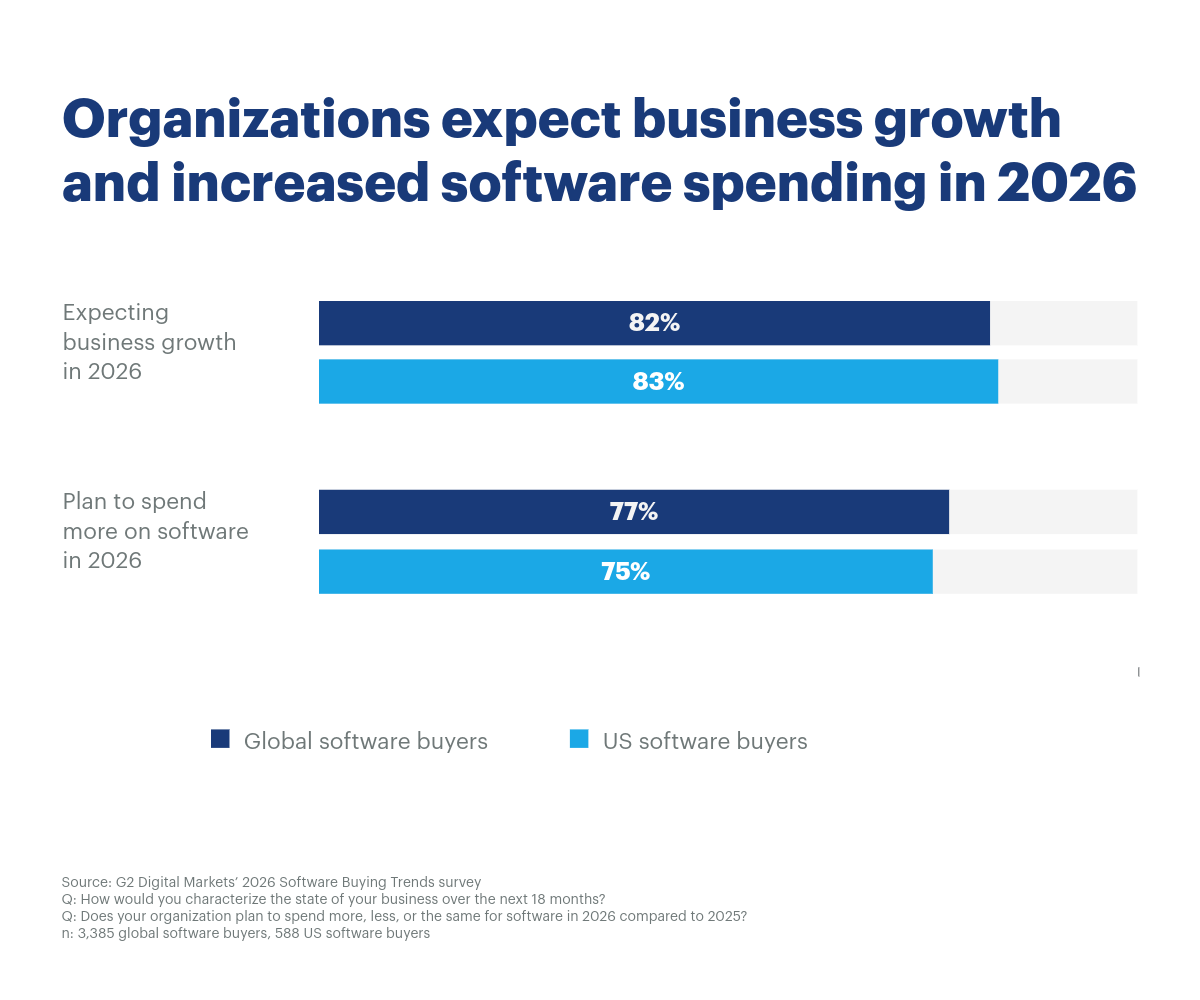
Software demand is increasing in the US and globally. The 2026 Software Buying Trends survey* shows that most organizations expect business growth and plan to invest more in software this year. In the US, companies averaged $72,079 in annual software spend in 2025, signaling sustained momentum as buyers move from evaluation into active purchasing.

Why this matters for vendors: This environment presents both opportunity and pressure. Buyers are researching more options, comparing vendors closely, and engaging earlier in the decision process. Capturing demand now depends on being visible when buyers begin their search and on staying relevant throughout their evaluation.

How to capture in-market buyers: Marketplaces such as Capterra, Software Advice, and GetApp connect vendors with buyers actively researching software. Software lead-generation campaigns across Digital Markets, including pay-per-click (PPC) and pay-per-lead (PPL) programs, help vendors reach in-market buyers, support sales teams with qualified demand, and compete more effectively as categories become more crowded.

Reach your target audience with Digital Markets’ programs

Are you new to Digital Markets? Create an account to explore how marketplaces and demand programs support software discovery and evaluation.

Already have an account? Log in to activate Engaged Buyers (PPC) and Qualify Leads (PPL) campaigns and start capturing buyer demand.

Optimism about business growth is boosting software budgets

More than four out of five companies worldwide, including those in the US, anticipate business growth in 2026, according to our survey. That optimism is reflected in spending plans, with most organizations increasing their software budgets this year. US firms, in particular, continue to invest at high levels, building on last year’s strong average spend.

Why it matters

Buyers are ready to invest, and competition is heating up. Most plan to increase software spending by 5% to 15%, while nearly two out of five expect increases of 15% or more compared to last year. For vendors, this creates a narrow window to influence decisions while buyers are still comparing options.

Engage buyers early with targeted lead-generation programs

Engaging buyers before they finalize their shortlists enables vendors to improve pipeline quality and support more predictable sales cycles. Digital Markets helps vendors capitalize on this advantage with two primary software lead-generation approaches, each tailored to a different stage of the buying journey:

  • Engaged Buyers (PPC) helps vendors increase visibility among buyers actively searching and comparing software categories.
  • Qualify Leads (PPL) supports teams that want to receive leads aligned to specific qualification criteria, such as company size or use case.

Both programs are designed to connect vendors with buyers who have demonstrated intent, helping sales and marketing teams focus on demand that is already in motion.

Log in to your Digital Markets account to set up and activate your campaigns.

What’s driving higher software investment in 2026

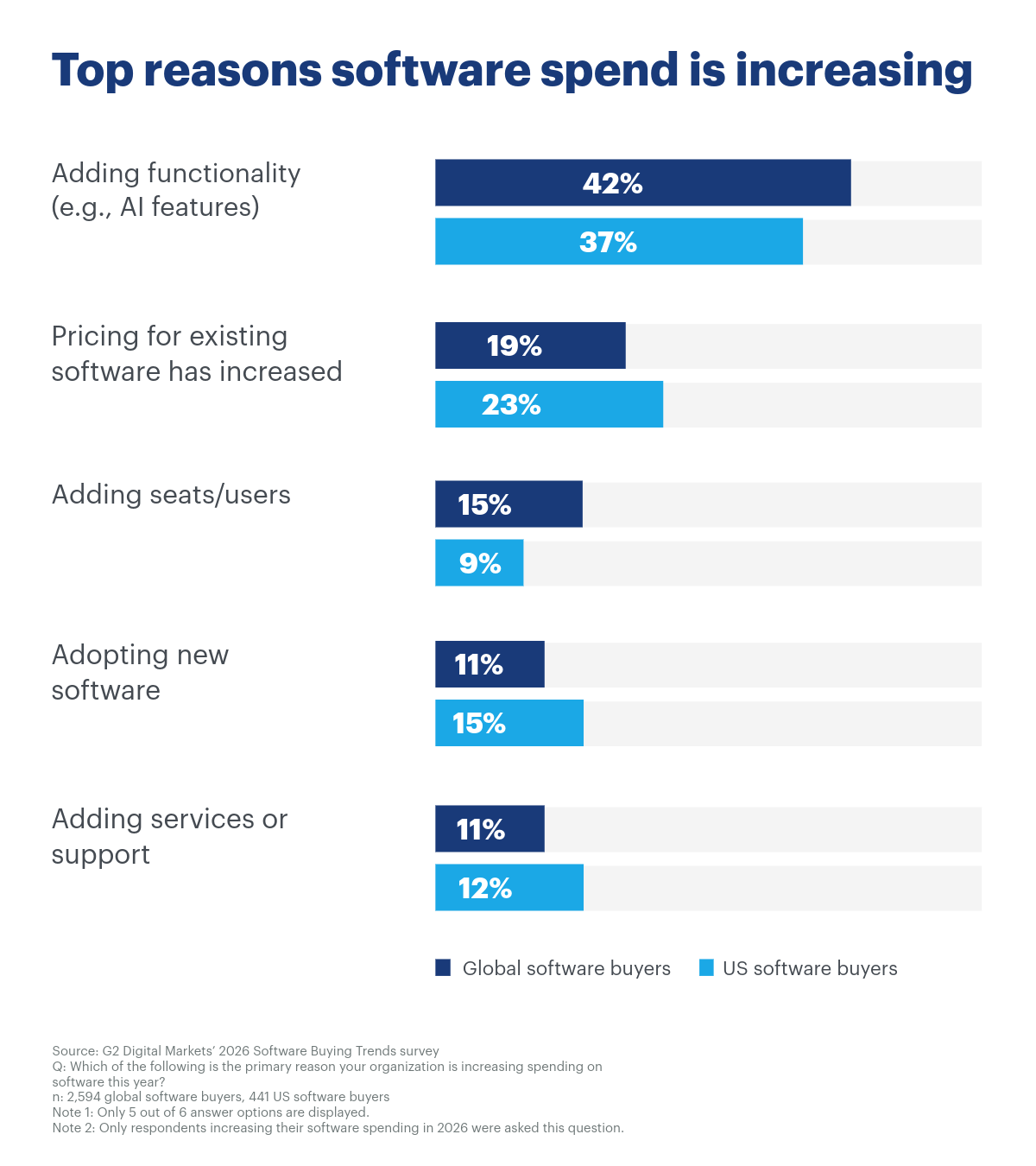
As business needs evolve, buyers are prioritizing flexibility and new capabilities in their software decisions. Many organizations are expanding user access, adopting AI features, responding to pricing changes from existing vendors, or adding services and support to meet operational demands.

Rather than maintaining the status quo, buyers are reassessing their software stacks and looking for solutions that align with current and future requirements. Investment decisions increasingly reflect the need to balance innovation, cost management, and long-term scalability.

Why it matters

Buyers are not only renewing existing tools. Many are upgrading, expanding, or replacing software to address new priorities. Increased interest in AI, combined with expectations for flexible pricing and clearer value, means vendors must communicate how their products adapt to changing needs.

Vendors that make their functionality, pricing models, and roadmap direction easy to understand are better positioned to stand out during evaluation.

Align your campaigns with buyer priorities

Vendors can improve performance by aligning messaging and assets with what buyers are actively seeking. Here are a few practical tips:

  • Highlight new features, AI capabilities, and pricing plans within your Digital Markets campaigns.
  • Use targeted landing pages for new leads and tailored email campaigns for existing customers.
  • Keep profile pages up to date with current screenshots, videos, and product descriptions so buyers see accurate, updated information during their research.

Log in to your Digital Markets account to review and update your product listing.

Vendors must address buyers’ top challenges during evaluation

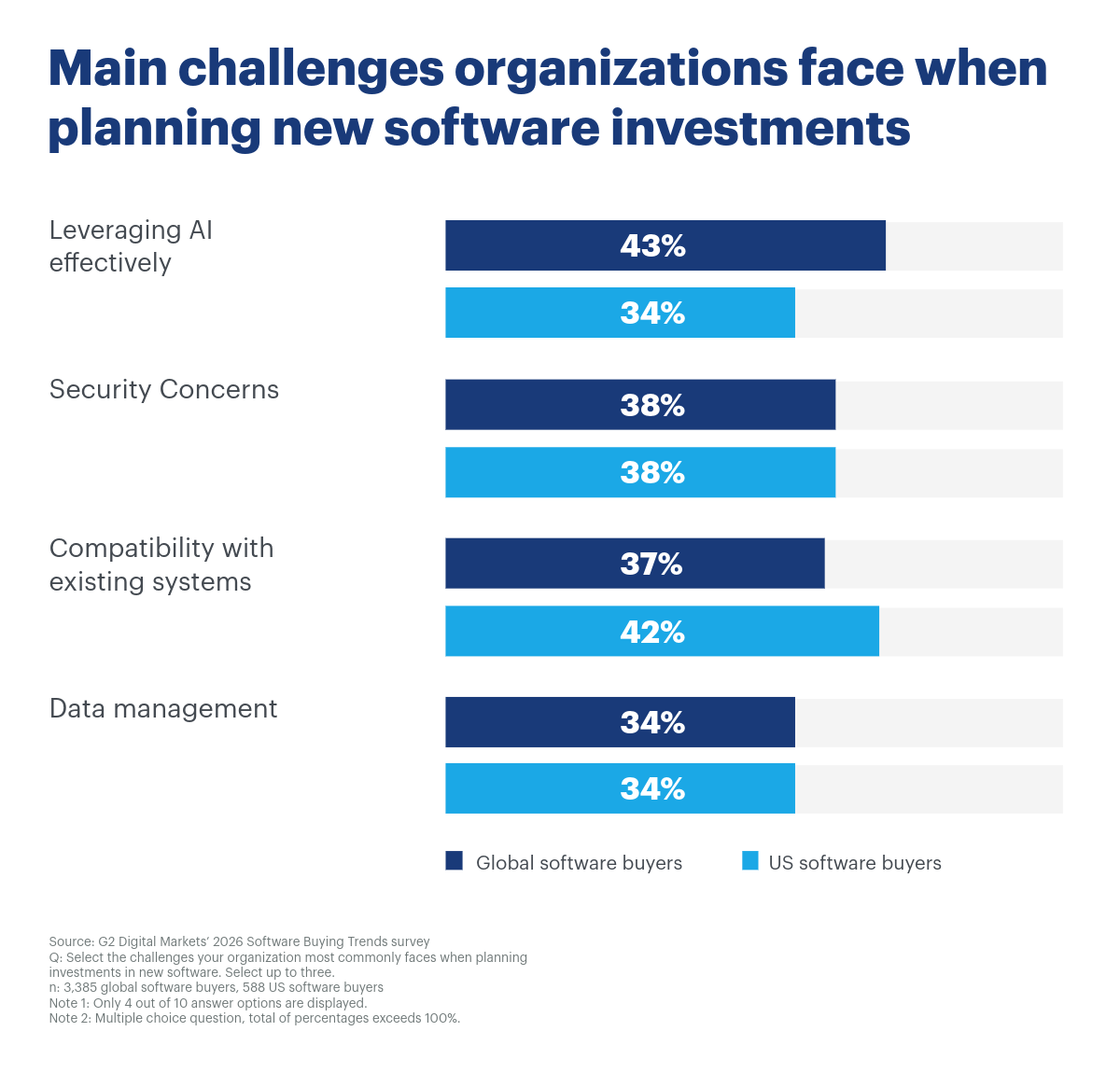
Beyond features, buyers are looking for guidance. Many expect vendors to help them manage security concerns, adopt AI responsibly, integrate new tools with existing systems, and handle data requirements. As organizations prioritize IT security, generative AI (GenAI), IT management, and customer relationship management (CRM), vendor expertise plays a central role in the buying experience.

Why it matters

Trust is built when vendors address buyer concerns directly. Buyers respond to clear explanations of how products handle security, integration, and compatibility, as well as how vendor teams support implementation and adoption.

Providing transparent information and practical guidance helps buyers feel more confident throughout the decision process.

Become a partner, not just a provider

Vendors can use their Digital Markets profiles and campaigns to demonstrate how they support buyers beyond the initial sale by doing the following:

  • Explain how your team helps customers address security, integration, and AI-related challenges.
  • Share case studies, FAQs, and resources that answer common buyer questions.
  • Update screenshots and videos to reflect real-world use cases and workflows.
  •  Engage buyers through Q&A, webinars, or live demos to support education and evaluation.

Review your Digital Markets account to ensure your product listings reinforce your role as a trusted advisor during complex buying decisions.

Now is the right time to invest in software lead-generation

Software buyers in 2026 are optimistic, increasing budgets, and actively evaluating new solutions. At the same time, competition for attention is growing as more vendors enter crowded categories.

Vendors that invest in software lead generation through PPC and PPL campaigns on Digital Markets can connect with high-intent buyers at critical points in the research journey. Success this year will favor vendors that anticipate buyer needs, communicate value clearly, and maintain an up-to-date presence where buyers are already searching.

Taking action now helps ensure your brand remains visible, credible, and aligned with how software buying decisions are made today.


Methodology

*Digital Markets’ 2026 Software Buying Trends Survey was conducted online in August 2025 among 3,385 respondents in Australia (n=281), Brazil (n=278), Canada (n=293), France (n=283), Germany (n=279), India (n=260), Italy (n=263), Mexico (n=288), Spain (n=273), the U.K. (n=299), and the U.S. (n=588), at businesses across multiple industries, ages (1 year in business or longer), and sizes (5 or more employees). Business sizes represented in the survey include: 1,676 small (5-249 full-time employees), 822 midsize  (250-999), and 887 enterprise (1,000+).

The goal of this study was to understand the timelines, organizational challenges, research behaviors, and adoption processes of business software buyers. Respondents were screened to ensure their involvement in business software purchasing decisions.

For the purposes of this report, disappointed buyers are defined as those who experienced both an unexpected business disruption resulting from software implementation and purchase regret (n=1,368), while successful buyers are those who did not experience disruption or regret (n=1,147).


Bruno Peláez

Bruno Peláez

Bruno is an Associate Principal Analyst at Digital Markets, where he focuses on technology trends in human resources, finance, marketing, customer service, and project management. Drawing on global market research, user reviews, and advisor-buyer interactions, he analyzes the changing B2B technology landscape.

Get the Gartner Digital Markets Newsletter

We value your privacy. By submitting this form, you agree we may use your information in accordance with the terms of the Gartner Digital Markets Privacy Policy.

Connect. Convert. Thrive.

Connect to millions of in-market software buyers around the globe with our all-encompassing suite of marketing services.