SYDNEY, Australia, March 16, 2026
- Gartner client? Log in for personalized search results.
Gartner Security & Risk Management Summit 2026, Sydney: Day 1 Highlights
It’s not too late to join the conference
Overview
We are bringing you news and highlights from the Gartner Security & Risk Management Summit, taking place this week in Sydney, Australia. Below is a collection of the key announcements and insights coming out of the conference.
On Day 1 from the conference, we are highlighting sessions on the real cost of cybersecurity; the outlook for AI and cybersecurity; and AI-enhanced SOCs.
Key Announcements
The Real Cost of Cybersecurity
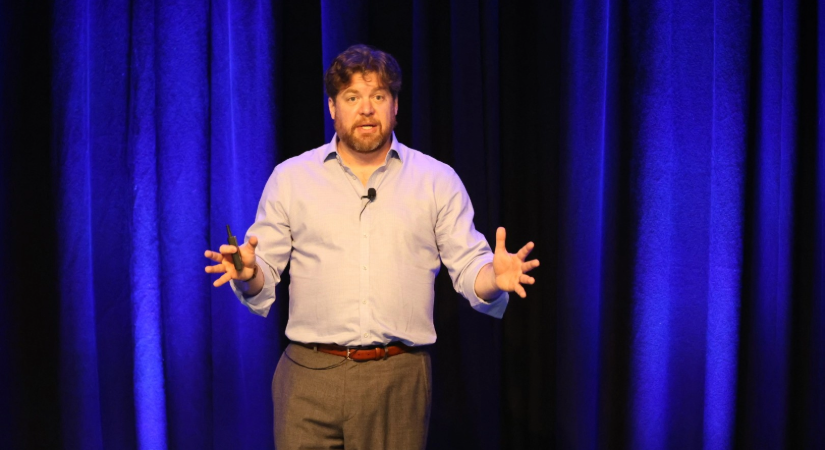
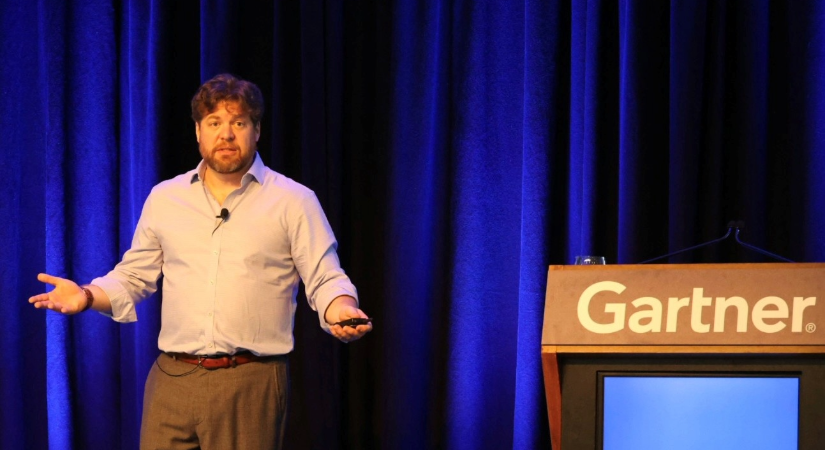
Presented by Christopher Mixter, VP Analyst, Gartner
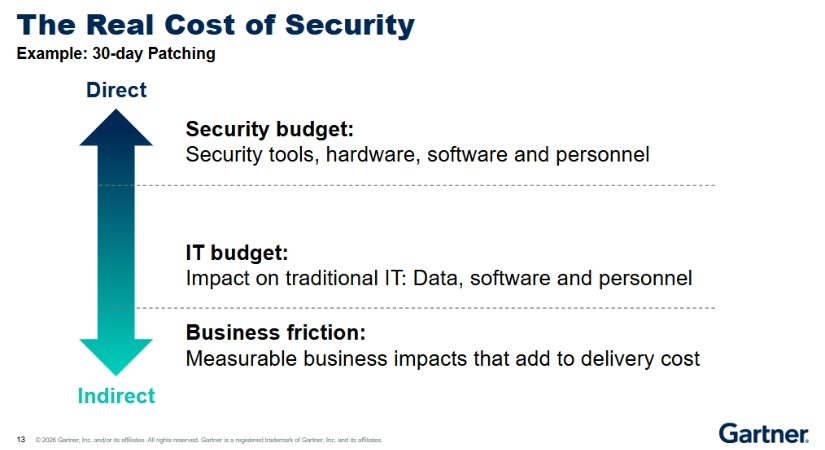
Cybersecurity costs extend beyond the security budget. The real cost includes the comprehensive expenses required to deliver cybersecurity, including capital and operational expenses across both IT and security, and business friction. In this session, Christopher Mixter, VP Analyst at Gartner, explained how to adopt a broader cost perspective and develop a more complete understanding of security costs to better guide investment decisions.
Key Takeaways
“The cybersecurity budget doesn’t represent the real cost of protecting an organization. The real cost of cybersecurity is the all-in cost of delivering protection: technology, labor and the business friction that results from controls.”
“Knowing the real cost of cybersecurity supports an outcome-driven approach because it gives business leaders transparency into the tradeoffs between protection, spend and business enablement.”
“Outcome-driven metrics must be the starting point for measuring the real cost of cybersecurity. They measure control performance, offer a forward-looking view of exposure, can be influenced by investment and allow benchmarking across organizations and governments.”
“The real cost of cybersecurity isn’t just a way to justify budgets or new resources; it’s a tool to engage executives in active conversation about the value of cybersecurity, how much they want to invest and how much risk they are willing to accept.”
“Effective CISOs and CIOs use the real cost of cybersecurity to negotiate protection level agreements with their executives, increasing transparency of value for cost, clarity of accountability and defensibility in the event of an adverse cybersecurity event.”
Journalists can receive additional information and/or request an interview with the Gartner expert by contacting Emma Keen at emma.keen@gartner.com.
Outlook for AI & Cybersecurity
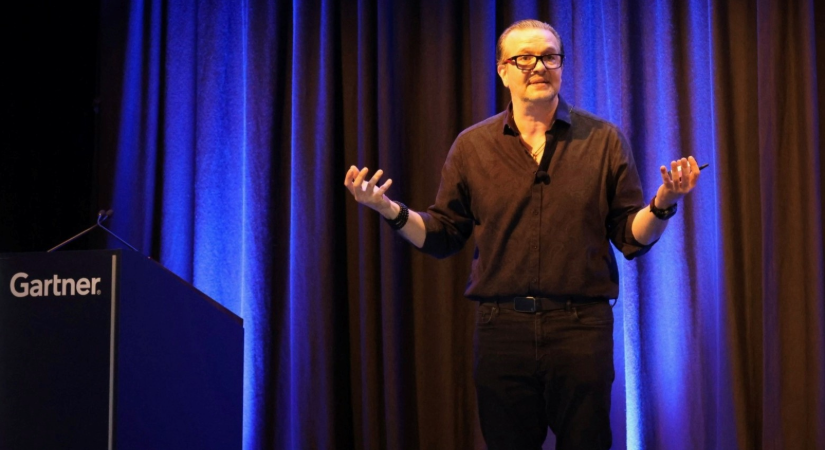
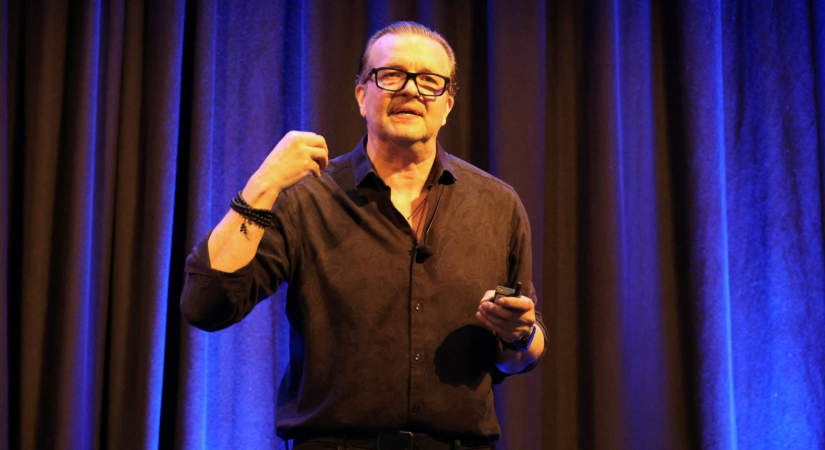
Presented by Leigh McMullen, Distinguished VP Analyst and Gartner Fellow
Predicting AI’s impact on cybersecurity remains fluid, with some threats accelerating faster while others have yet to emerge at the scale once predicted. In this session, Leigh McMullen, Distinguished VP Analyst and Gartner Fellow, discussed offensive and defensive generative AI use cases across near-term, long-term and uncertain horizons.
Key Takeaways
“AI has become both the engine of cybersecurity transformation and the accelerant of risk. 87% of leaders identify AI vulnerabilities as the fastest growing and most urgent cybersecurity risk.”
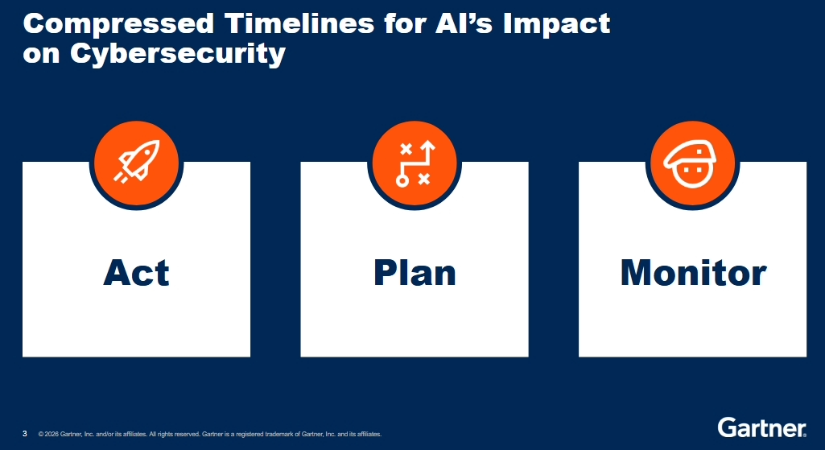
“Unlike previous technology waves, AI timelines are compressed. It’s important to operate in three lanes: act for what’s known now, plan for the next few quarters, and monitor the uncertain horizon. Today’s environment requires thinking in sprints, not program years.”
“Most technologies cybersecurity teams have to secure are deterministic, but AI isn’t. Part of its value comes from unpredictability, making it behave more like humans with all of the challenges of anticipating, shaping and responding to unexpected events.”
“Threat actors and rogue states won’t be limited by regulation, driving damaging AI to evolve without boundaries. Organizations must invest in defensive and offensive technologies as quickly and as broadly as threat actors do.”
“Most vendors are racing toward the vision of an AI security platform, but AI security is still too broad for any single platform to go deep enough. Focus the next 12-18 months on AI usage control and AI application security as the most proven way to secure AI applications and agents.”
Journalists can receive additional information and/or request an interview with the Gartner expert by contacting Emma Keen at emma.keen@gartner.com.
AI-Enhanced SOC: Bridging the Gap to Advanced Automation
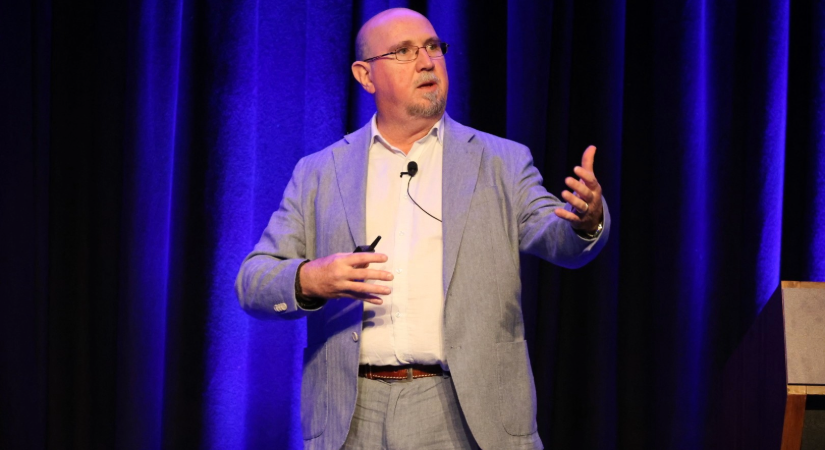
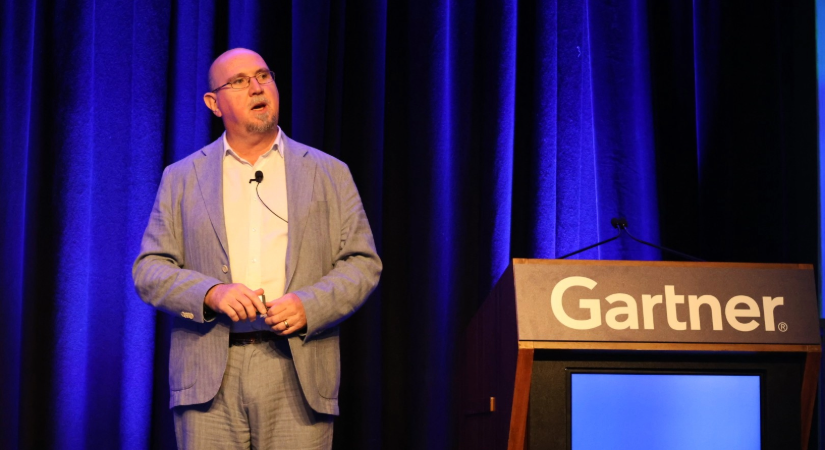
Presented by Craig Lawson, VP Analyst, Gartner
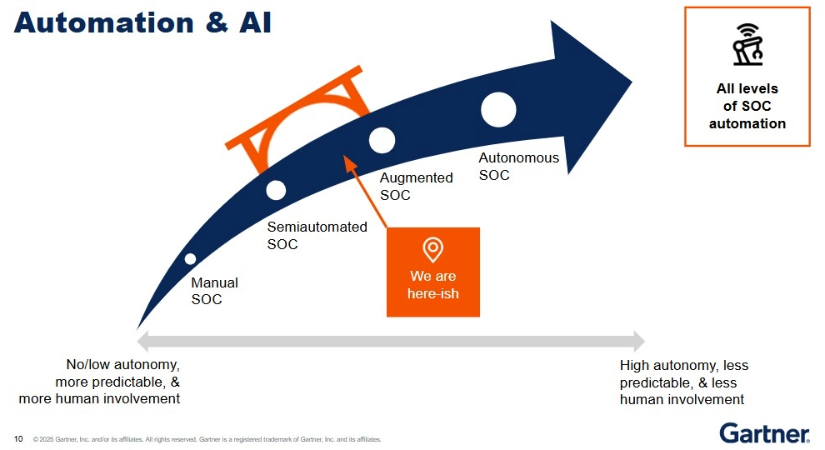
As threats become more complex, security operations centres (SOCs) must evolve towards using more AI and automation, while keeping humans involved in critical decisions. In this session, Craig Lawson, VP Analyst at Gartner, outlined how AI, machine learning and advanced analytics enable SOCs to operate with greater independence while preserving essential human oversight for adaptive cybersecurity.
Key Takeaways
“Gartner predicts 25% of common SOC tasks will become 50% more cost-efficient due to automation enhancements and hyperscaling strategies by 2027.”
“Bridging the gap to advanced automation in the SOC can only be achieved by progressing through the different stages of AI adoption at a pace the organization can sustain.”
“Determine what can be automated today and strategize about what is coming to enable automation and augmentation in the future. The SOC team can then handle greater workloads through the use of AI and automation.”
“Outcomes are only defensible when supported by metrics that demonstrate improvements in the activities the team is doing today. Without doing so, security operations automation initiatives can never be objectively measured.”
“Continuously validate the outputs of automation and AI tools and use metrics consistently to ensure accuracy and reliability. Rely on existing metrics, rather than inventing new ones.”
Journalists can receive additional information and/or request an interview with the Gartner expert by contacting Emma Keen at emma.keen@gartner.com.

It’s not too late to join the conference
That's a wrap on Day 1. Tune back in tomorrow for more updates from the conference.


About Gartner
Gartner (NYSE: IT) delivers actionable, objective business and technology insights that drive smarter decisions and stronger performance on an organization’s mission-critical priorities. To learn more, visit gartner.com.