Barcelona, Spain, May 20, 2026
- Gartner client? Log in for personalized search results.
Gartner Supply Chain Symposium/Xpo 2026 Barcelona: Day 3 Highlights
Overview
We are bringing you news and highlights from the Gartner Supply Chain Symposium/Xpo, taking place this week in Barcelona, Spain. Below is a collection of the key announcements and insights coming out of the conference.
On Day 3 from the conference, we are highlighting sessions on AI in supply chain, architecting the autonomous supply chain, and emerging logistics and warehousing technologies. Be sure to check this page throughout the day for updates.
Key Announcements
Signature Series: Pathways to Progress for AI in Supply Chain
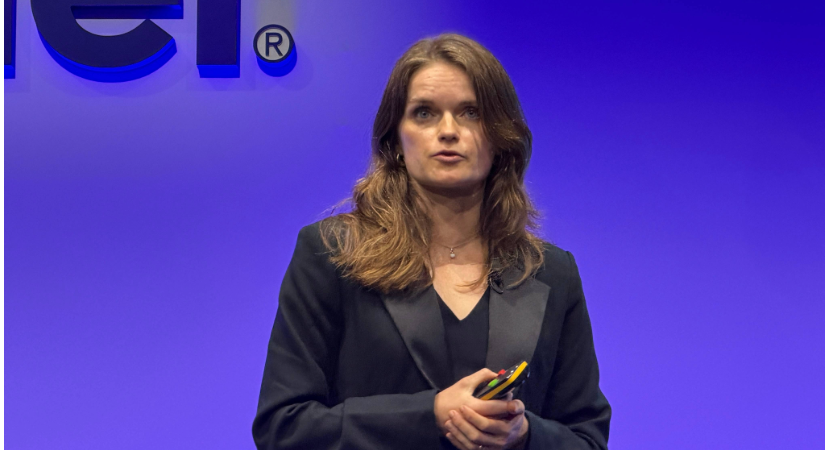
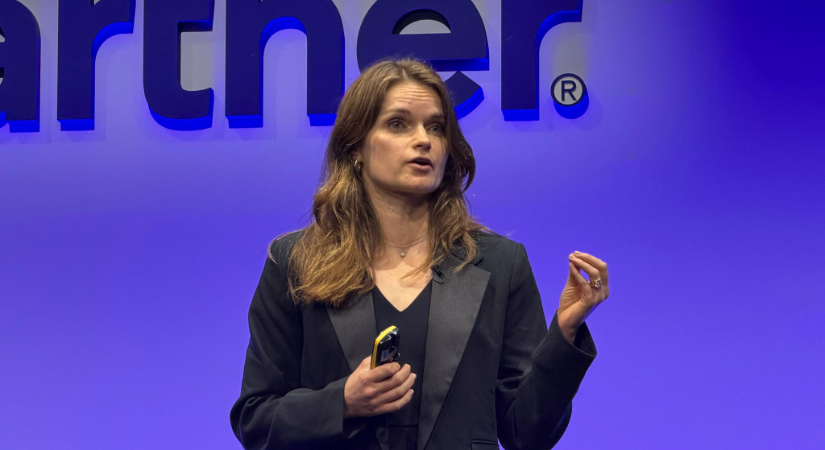
Presented by Tess Frenzel, Director Analyst, Gartner
As supply chain leaders face pressure to prove near-term returns from AI while also using it to transform operations, success depends on balancing both demands at once. In this session, Tess Frenzel, Director Analyst at Gartner, offered insights into AI-driven supply chain technology trends and highlighted the approaches organizations can balance to deliver value.
Key Takeaways
“Supply chain leaders must move from siloed, project-by-project AI investments to a ‘principled bets’ strategy that balances short-term efficiency gains with longer-term transformation.”
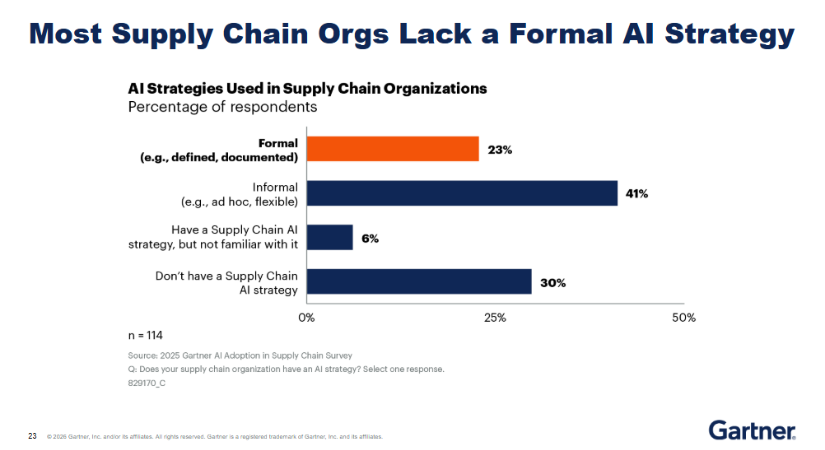
“Low data quality remains the top barrier to scaling AI, making it critical to move from BI-oriented data foundations to AI-ready data that is connected, contextualized and continuous.”
“AI can help narrow the insights curve by improving data quality, orchestrating fragmented systems and expanding access through natural language interfaces, but people still define the semantic layer, governance rules and operating assumptions.”
“In the near-term, to improve returns from AI adoption, CSCOs should shift from encouraging experimentation to working with their leadership teams to provide clear guidance and expectations on how employees can best use AI in their workflows."
"In the long-term, supply chains must begin to shift to an AI-native operating model, in which workflows, roles, and orgs are designed to amplify the impact of AI."
Journalists can receive additional information and/or request an interview with Tess Frenzel by contacting Justin Lavelle at justin.lavelle@gartner.com.
Betting on AI: Architecting the Autonomous Supply Chain with a Bimodal Roadmap
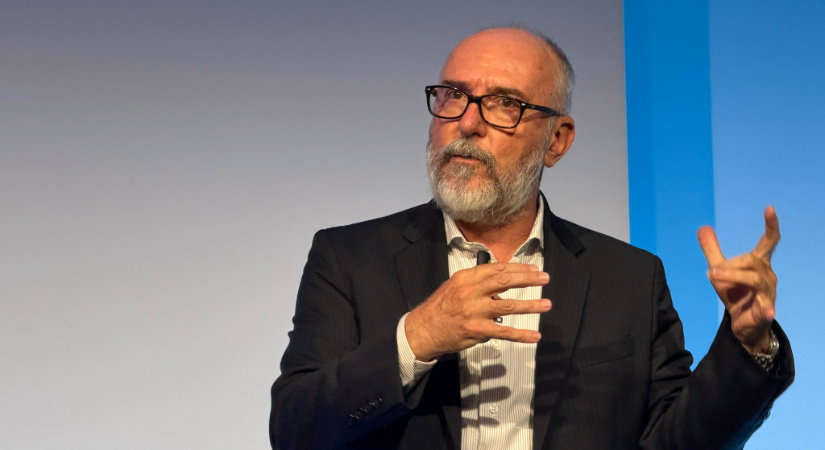
Presented by Pierfrancesco Manenti, VP Analyst, Gartner
CEOs are betting big on AI, yet 77% of supply chain operating models are unfit to support it. In this session, Pierfrancesco Manenti, VP Analyst at Gartner, discussed how CSCOs can deploy a bimodal roadmap to balance the need for immediate AI efficiency wins, while creating space for AI-native transformation over the long term.
Key Takeaways
“Supply chain leaders should redesign the operating model, not just deploy AI, because human-centric processes, fragmented data and outdated decision models limit the value AI can deliver.”
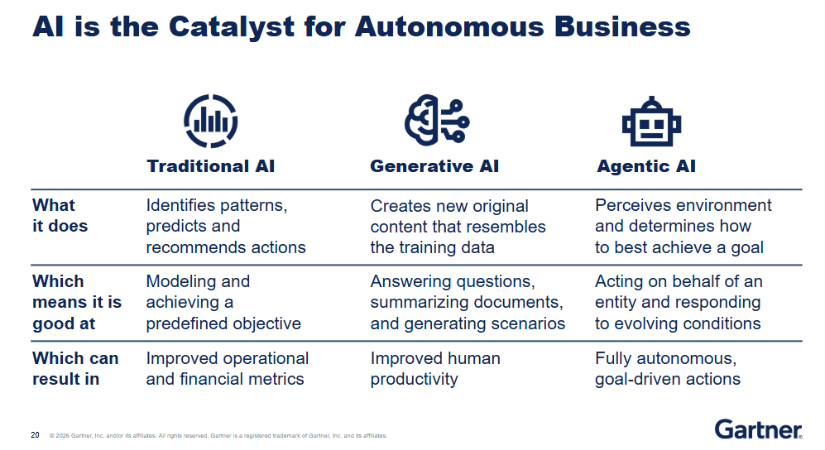
“The long-term ambition should be an autonomous business that amplifies people through self-improving, adaptable technology that can make decisions, take action and create new value.”
“AI’s role is evolving across traditional AI, generative AI and agentic AI, with agentic capabilities creating the greatest potential to shift supply chains from human-supported decisions to machine-executed decisions guided by people.”
“Organizations should pursue two approaches in parallel: AI-embedded initiatives that improve current processes and AI-native transformation that redesigns the operating model around autonomy.”
“A successful bimodal roadmap starts with Mode 1 efficiency wins to fund progress, while Mode 2 builds bold ambition and safe innovation sandboxes to prove the future operating model without disrupting core operations.”
Journalists can receive additional information and/or request an interview with Pierfrancesco Manenti by contacting Justin Lavelle at justin.lavelle@gartner.com.
Surfing the Hype Wave: How to Navigate Emerging Logistics Technologies
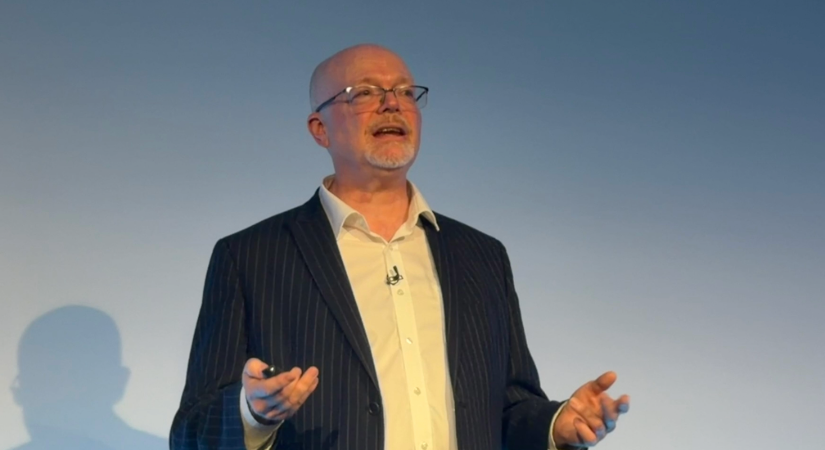
Presented by Simon Tunstall, Senior Director Analyst, Gartner
As logistics leaders face rising pressure to invest in emerging technologies while proving faster ROI, the priority is to separate hype from practical value. In this session, Simon Tunstall, Senior Director Analyst at Gartner, shared insights from Gartner’s Hype Cycle by highlighting which innovations position organizations for success.
Key Takeaways
“Over 80% of supply chain leaders expect funding increases, with AI the top investment, but only 20% of warehousing and transportation AI initiatives achieve their goals.”
“Leaders should match technologies in the Hype Cycle to their organization’s risk appetite, with earlier-stage technologies better suited to more risk-tolerant adopters and mature technologies better suited to more cautious ones.”
“Labor constraints, labor costs and capital pressure are accelerating interest in automation, and intralogistics smart robots stand out as a practical area to prioritize through targeted use cases rather than broad experimentation.”
“Technology decisions should be driven by business challenges rather than FOMO, with logistics leaders first assessing operational complexity and then matching the right foundational or emerging tools to those needs.”
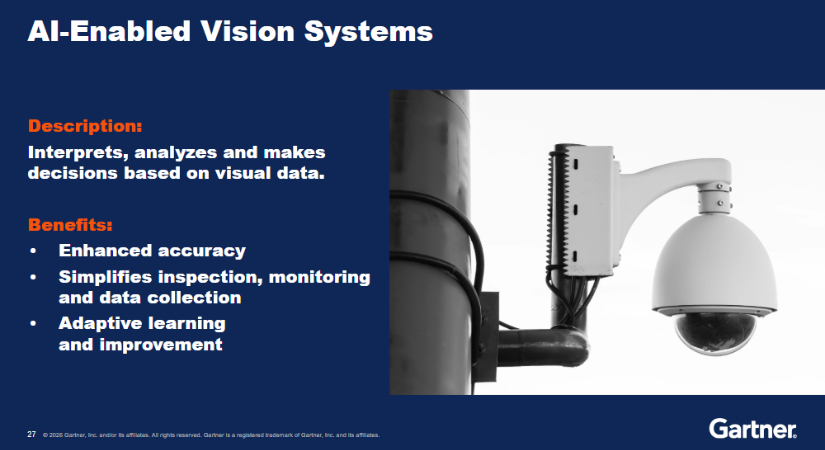
“AI can help address logistics complexity through use cases, such as vision systems, logistics network visibility, warehouse resource planning and orchestration, but organizations should weigh benefits, risks and timelines carefully before moving into more nascent areas, such as agentic AI.”
Journalists can receive additional information and/or request an interview with Simon Tunstall by contacting Justin Lavelle at justin.lavelle@gartner.com.
That's a wrap on this year's Gartner Supply Chain Symposium/Xpo in Barcelona. Until next year!


About Gartner
Gartner (NYSE: IT) delivers actionable, objective business and technology insights that drive smarter decisions and stronger performance on an organization’s mission-critical priorities. To learn more, visit gartner.com.