BARCELONA, Spain, May 20, 2026
- Gartner client? Log in for personalized search results.
Gartner Warns of Agent Washing Risks in Supply Chain Planning Technology Market
Analysts Discuss Agentic AI Roadmap for Supply Chain Planning at Gartner Supply Chain Symposium/Xpo
Agentic AI is reshaping the supply chain planning landscape, but hype and “agent washing” are creating real risks for organizations under pressure to deliver results, according to Gartner, Inc., a business and technology insights company.
Supply chain planning (SCP) leaders who focus on proven use cases, strengthen data and governance foundations, and follow a deliberate adoption sequence can improve near-term productivity while preparing for more advanced agentic capabilities over time, attendees learned at Gartner Supply Chain Symposium/Xpo in Barcelona.
“SCP leaders should prepare for an agentic AI future, but they need to separate meaningful capability from market noise,” said Jan Snoeckx, Senior Director Analyst in Gartner’s Supply Chain practice. “The priority today is not full autonomy, but building the operational discipline, architectural flexibility and decision frameworks that allow agentic AI to scale as the technology matures.”
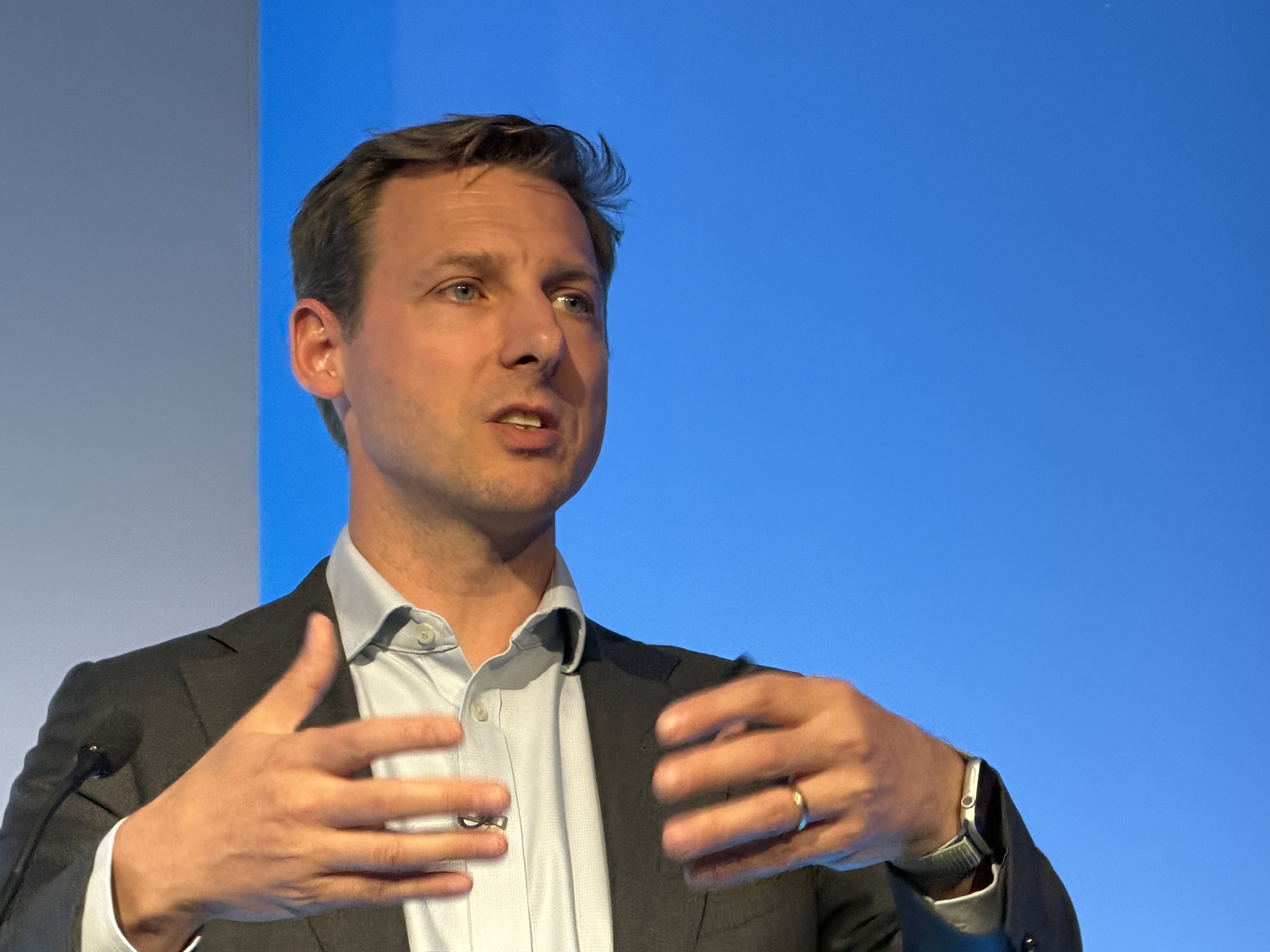
Gartner Senior Director Analyst Jan Snoeckx presents at Gartner Supply Chain Symposium/Xpo in Barcelona.
Opportunities and Risks With Agentic AI
Agentic AI now dominates vendor messaging and executive discussions in SCP. Snoeckx told attendees that most of the current agentic capabilities improve user experience through query interpretation, recommendations and conversational support, rather than fundamentally changing decision quality or how decisions are made.
True autonomous planning would require the automatic generation of plans, automatic selection of the optimal plan and seamless execution without human intervention. Most current solutions have not reached that level of end-to-end autonomy, and vendors claiming end-to-end autonomous supply chain planning before 2027 are overstating what is possible in the near term.
Snoeckx said agent washing further obscures those differences by relabeling conventional automation as agentic, increasing the risk of misaligned investments and long-term lock-in.
Despite current constraints, there are immediate opportunities for efficiency gains.
Traditional automation remains well suited to repetitive, low-complexity tasks, while current AI agents can support high-volume, medium-complexity planning actions where risk is low. Gartner recommends a measured approach that captures value now while building the foundations for more advanced agentic planning in the future.
Snoeckx warned SCP leaders to avoid common missteps in agentic AI adoption:
- Do not mistake vendor positioning for true autonomy: Organizations should rigorously scrutinize agentic claims, because many current offerings do not independently re-sequence objectives, negotiate trade-offs or adapt execution logic.
- Avoid monolithic transformations and legacy retrofits: Inflexible upgrades and retrofitted agents can limit future flexibility, cap ROI and increase long-term lock-in.
- Do not pursue high-risk autonomous use cases too early: Cross-enterprise negotiation, dynamic cost trade-offs and ethical judgment are poor candidates for agentic AI before 2027.
According to Gartner research, supply chain planning leaders should take the following actions when evaluating agentic AI solutions:
- Prioritize “sweet spot” use cases for immediate value: Focus early efforts on well-defined, high-volume planning activities where impact is measurable and the cost of error is low, such as touchless forecasting for stable SKUs or automated replenishment parameter changes.
- Build data, integration and governance foundations: Invest in unified, real-time data, robust integration across planning and execution systems, and transparent governance with clear guardrails, human hand-off points and audit mechanisms.
- Apply frontier AI beyond assistants: Use AI not only for conversational support, but also to create and maintain digital twins, automate data management and integration, and improve how users engage with planning decisions and trade-offs.
Gartner clients can read more in: Prepare for Agentic AI in Supply Chain Planning Without Betting on Full Autonomous. Nonclients can learn more in: The AI-Native Supply Chain.
Gartner is the World Authority on AI
Gartner is an indispensable partner to C-Level executives and technology providers as they implement AI strategies to achieve their mission-critical priorities. The independence and objectivity of Gartner insights provide clients with the confidence to make informed decisions and unlock the full potential of AI. Clients across the C-Level are using Gartner's proprietary AskGartner AI tool to determine how to leverage AI in their business. With more than 2,500 business and technology experts, 6,000 written insights, as well as more than 4,000 AI use cases and case studies, Gartner is the world authority on AI. More information can be found here.
About Gartner Supply Chain Symposium/Xpo
Gartner Supply Chain Symposium/Xpo is the world’s most important gathering of CSCOs and supply chain executives. Explore how CSCOs predict disruptions, achieve visibility, and lead with AI and innovation. Gain insights from Gartner experts and peers on rethinking models, integrating technology and designing resilient, future-ready supply chains.
About the Gartner Supply Chain Practice
The Gartner Supply Chain Practice provides actionable, objective insights for supply chain leaders and their teams, so they can respond to disruption and innovate for the future through leading-edge supply chain management practices. Additional information is available at https://www.gartner.com/en/supply-chain.
Follow news and updates from the Gartner Supply Chain Practice on LinkedIn and X using #GartnerSC. Visit the Gartner Supply Chain Newsroom for more information and insights.


About Gartner
Gartner (NYSE: IT) delivers actionable, objective business and technology insights that drive smarter decisions and stronger performance on an organization’s mission-critical priorities. To learn more, visit gartner.com.