LONDON, June 8, 2026
- Gartner client? Log in for personalized search results.
Gartner Finance Symposium/Xpo 2026 London: Day 1 Highlights
It’s not too late to join the conference
Overview
We are bringing you news and highlights from the Gartner Finance Symposium/Xpo 2026, taking place this week in London. Below is a collection of key announcements and insights coming out of the conference.
On Day 1 of the conference, we are highlighting sessions on how to super-charge financial forecasting, succeed as a new to role CFO, and avoid the most common data quality pitfalls. Be sure to check this page throughout the day for updates.
Key Announcements
Super-Charging Forecasting: A New Data Paradigm for Transformative Insights
Presented by Matthew Mowrey, VP Analyst, Gartner
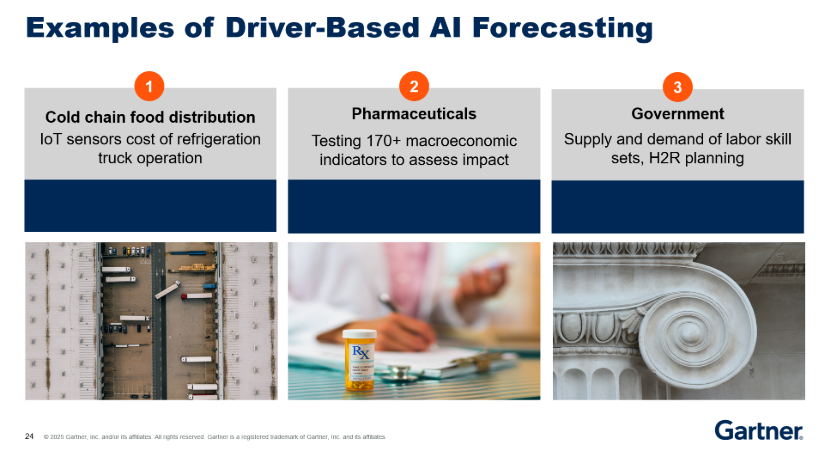
The biggest barrier to better, more driver-based forecasting is not AI capability itself, but the way finance teams structure and optimize data. In this session, Matthew Mowrey, VP Analyst at Gartner, outlined how finance needs to unlock value and rebuild forecasting around business logic, starting with driver-based models, mapping how outcomes are created, and translating that logic into data design.


Key Takeaways
Forecasting challenges tend to stem from how finance structures data, with many forecasts still built as accounting exercises rather than models of how the business actually works.
Effective AI-driven forecasting starts by aligning to the business algorithm: demand drives revenue, revenue funds cost, and cost defines value.
First, define a forecast model and treat it as a living representation of how the business works.
Second, build a driver map that shows how key variables drive outcomes.
- Third, translate that business logic into data design using data maps to create a foundation for more effective AI-enabled forecasting.
Journalists can receive additional information and/or request an interview with Matthew Mowrey by contacting Rob van der Meulen at rob.vandermeulen@gartner.com.
Succeeding as a New-to-Role CFO
Presented by Dennis Gannon, VP Analyst, Gartner
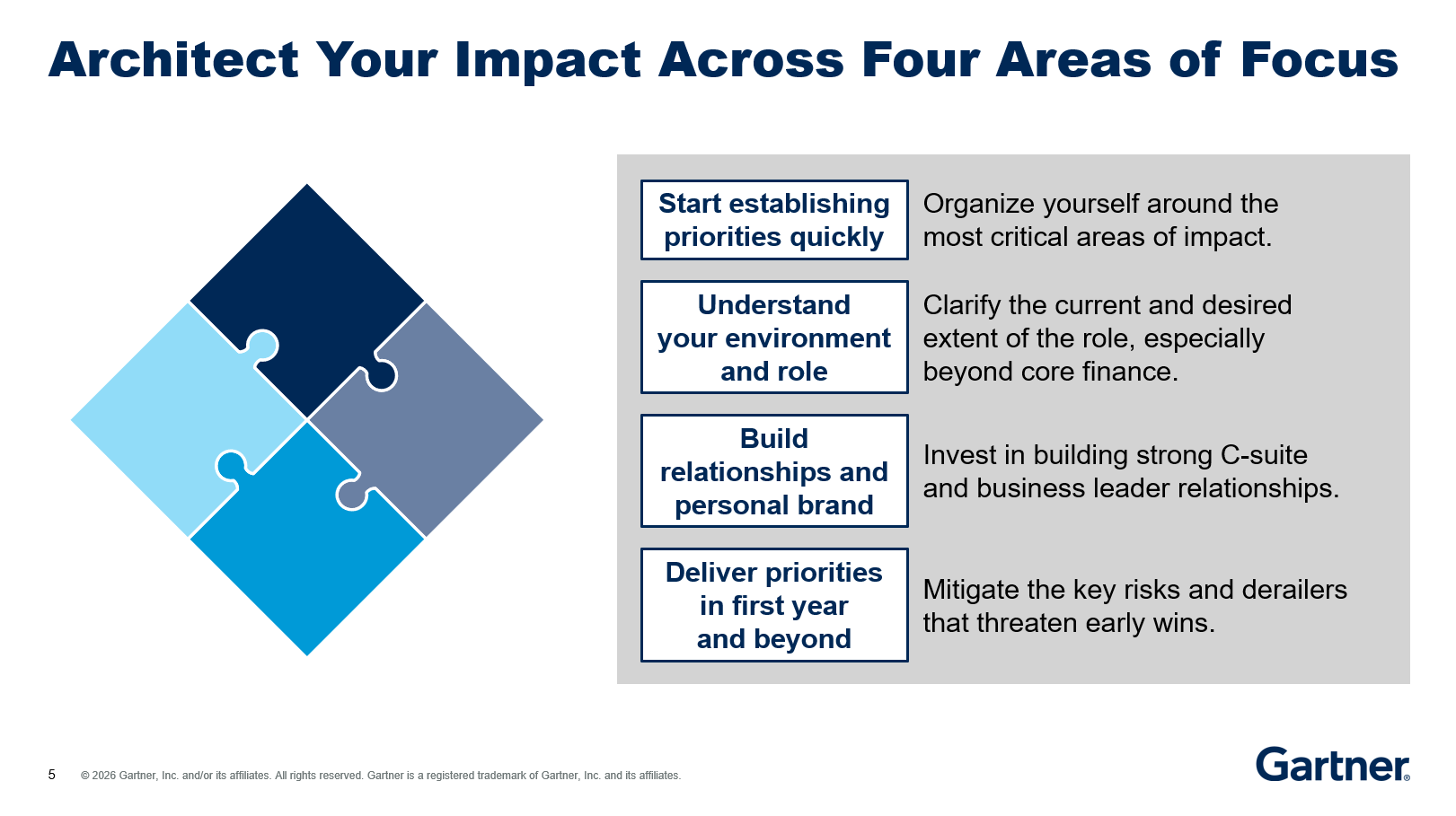
A successful CFO transition rarely happens by accident. In this session, presented by Dennis Gannon, VP Analyst at Gartner, shared how to accelerate their impact, avoid common derailers, and use their time, relationships and leadership attention more strategically.


Key Takeaways
- CFO transitions are more likely to succeed with a formal transition plan put in place early.
The modern CFO role often extends well beyond finance: increasingly owning or co-owning priorities, such as enterprise data and analytics, risk, strategy, AI and IT.
Success depends heavily on building the right relationships outside finance, especially with leaders, such as the CIO, business unit heads, and head of sales.
- One of the biggest risks for new CFOs is getting trapped in finance activity itself, rather than protecting time for strategy, cross-functional influence and higher-impact decisions.
Journalists can receive additional information and/or request an interview with Dennis Ganon by contacting Rob van der Meulen at rob.vandermeulen@gartner.com.
How CFOs Can Avoid AI Data Quality Pitfalls
Presented by Valeria Di Maso, Sr Director Analyst, Gartner
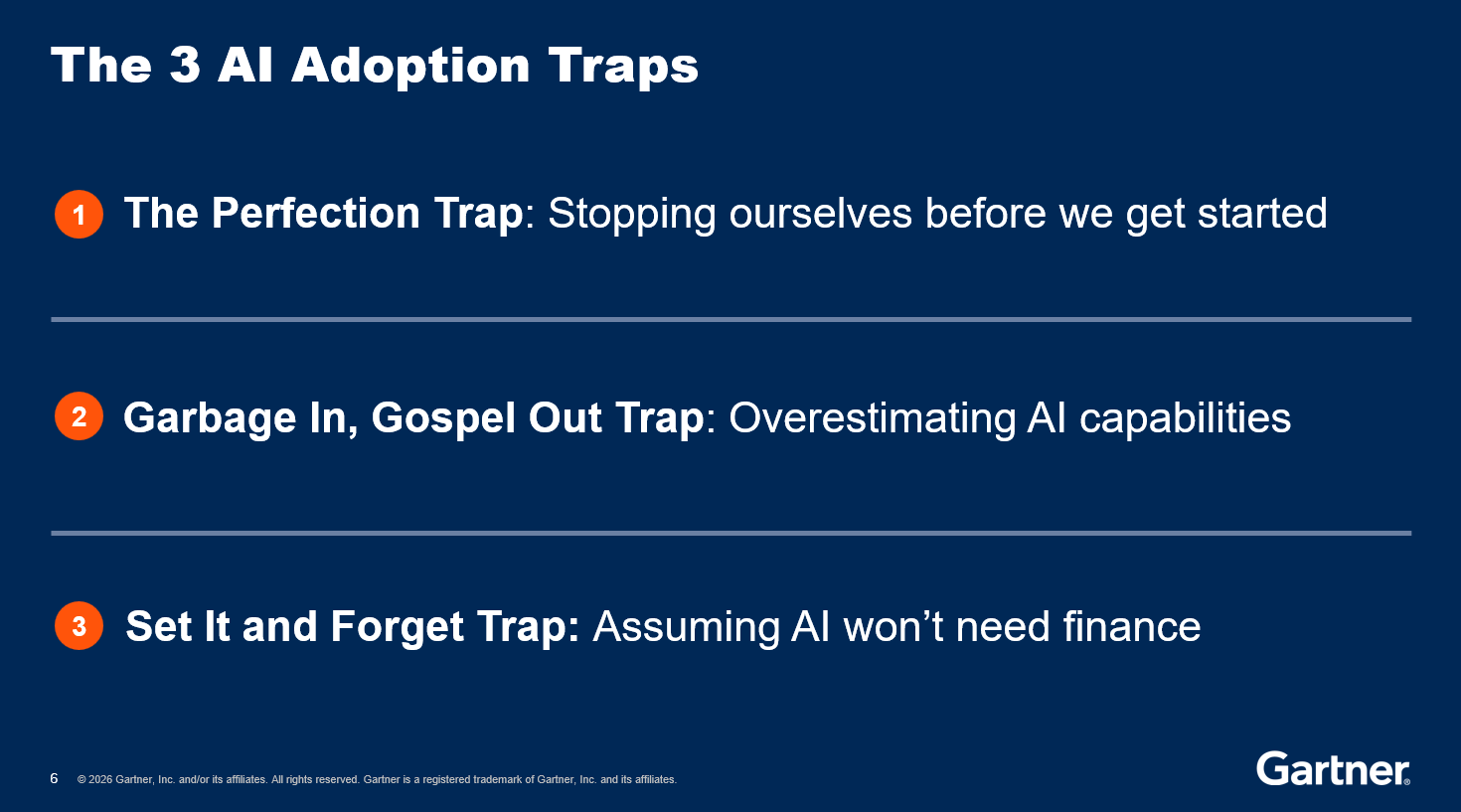
Finance teams often invest in powerful AI capabilities before building the data foundations, diagnostic mechanisms and governance structures required to use them safely. In this session, Valeria Di Maso, Sr Director Analyst at Gartner, laid out three common traps that derail AI in finance, and the CFO decisions that help organizations avoid them.


Key Takeaways
- AI in finance often fails not because the models are weak, but because the underlying data foundation and governance model cannot carry the speed of adoption.
The first trap is waiting for perfect data. High-performing CFOs do not fund perfection; they define AI-ready, fit-for-purpose data and use scorecards to decide when the data is good enough to start.
The second trap is assuming AI will fix poor data on its own. In practice, AI is a force multiplier and a diagnostic tool. It can detect and explain issues quickly, but finance must still interpret, decide and own the fix.
- The third trap is treating AI as something that can be set and forgotten. Data, business conditions and models drift over time, which means human oversight, defined ownership and clear intervention points are essential.
Journalists can receive additional information and/or request an interview with Valeria Di Maso by contacting Rob van der Meulen at rob.vandermeulen@gartner.com.

It’s not too late to join the conference
That's a wrap from day 1. Tune in tomorrow for updates from day 2!


About Gartner
Gartner (NYSE: IT) delivers actionable, objective business and technology insights that drive smarter decisions and stronger performance on an organization’s mission-critical priorities. To learn more, visit gartner.com.