ORLANDO, Fla., October 21, 2026
- Gartner client? Log in for personalized search results.
Gartner IT Symposium/Xpo 2026 Orlando: Day 3 Highlights
Overview
We are bringing you news and highlights from Gartner IT Symposium/Xpo, taking place this week in Orlando, Florida. Below is a collection of the key announcements and insights coming out of the conference. You can read the highlights here from Day 1 and Day 2.
On Day 3, we are revealing the top predictions for 2027 and beyond, explaining the future of cloud and sharing how CIOs are cutting costs with AI. Be sure to check this page throughout the day for updates.
Key Announcements
- Gartner Says AI Risk is Rising Faster Than AI Value
- Gartner Survey Finds Only 13% of CIOs Say Their Enterprise Has Realized Significant or Transformational Value from AI
- Gartner Says 44% of CEOs Struggle to Demonstrate AI Financial Returns as Technology Becomes Central to Growth
- Gartner Identifies the Top Strategic Technology Trends for 2027
- Gartner Forecasts Worldwide IT Spending to Grow 15% in 2027, Totaling $7.35 Trillion
Signature Series: Top Strategic Predictions for 2027 and Beyond
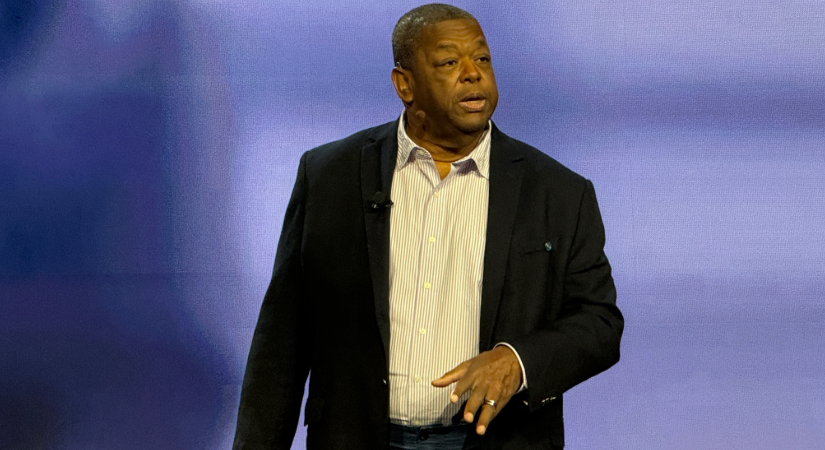
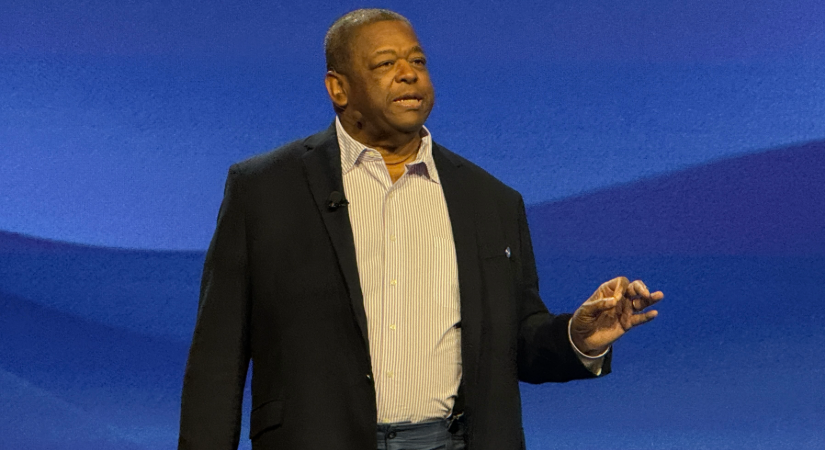
Presented by Daryl Plummer, Distinguished VP Analyst and Gartner Fellow
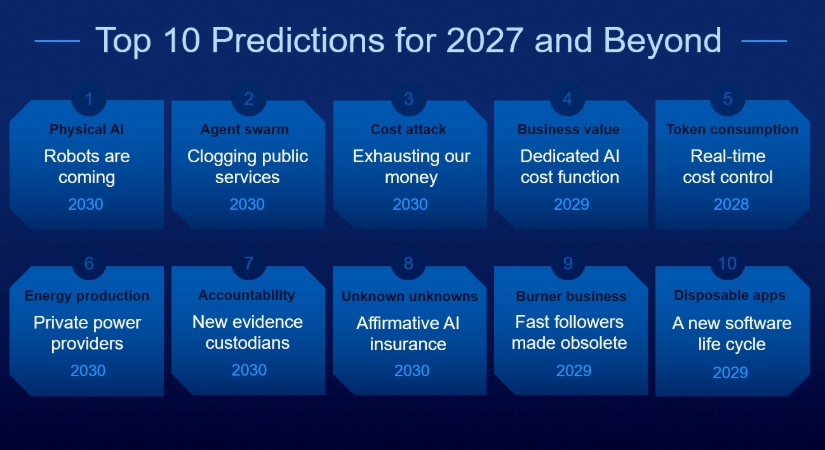
As AI reshapes the systems we rely on, successful organizations will balance innovation with responsibility to manage both the opportunities and unintended consequences of an AI-driven world. In this session, Daryl Plummer, Distinguished VP Analyst and Gartner Fellow, unveiled the top strategic predictions of the future that represent opportunities or threats.
Key Takeaways
- By 2029, 60% of organizations deploying AI will establish a dedicated function responsible for mapping AI total cost to value or profit. “Organizations should link token usage directly to business value metrics, while implementing clear governance, quotas and monitoring controls to ensure AI investments deliver measurable returns.”
- By 2029, 80% of new applications will be intentionally disposable – used for less than one year – revolutionizing the software lifecycle. “AI is making application development so accessible that employees will increasingly create temporary applications to meet short-term business needs.”
- By 2030, 80% of front-line workers employed by international companies will be assisted by physical AI systems. “Technologies such as robots, drones, autonomous vehicles and other embodied systems will sense, interact with and influence their surroundings.”
- By 2030, 80 percent of organizations with public-facing AI will have experienced a cost exhaustion attack creating excessive AI cost. “Make AI token costs a cybersecurity indicator, implement cost-focused security controls, and extend monitoring capabilities across all AI technologies.”
- By 2030, $10 trillion in enterprise-owned energy will make Global 2000 firms unexpected power providers – selling to grids and AI data centers, reshaping the utility industry. “As energy becomes a strategic, software-defined asset, organizations will need new capabilities to optimize production, storage and consumption.”
See the rest of the top predictions in the Gartner press release Gartner Unveils Top Strategic Predictions for 2027 and Beyond.
Journalists can receive additional information and/or request an interview with Daryl Plummer by contacting Matt LoDolce at matt.lodolce@gartner.com.
The Future of Cloud in 2031
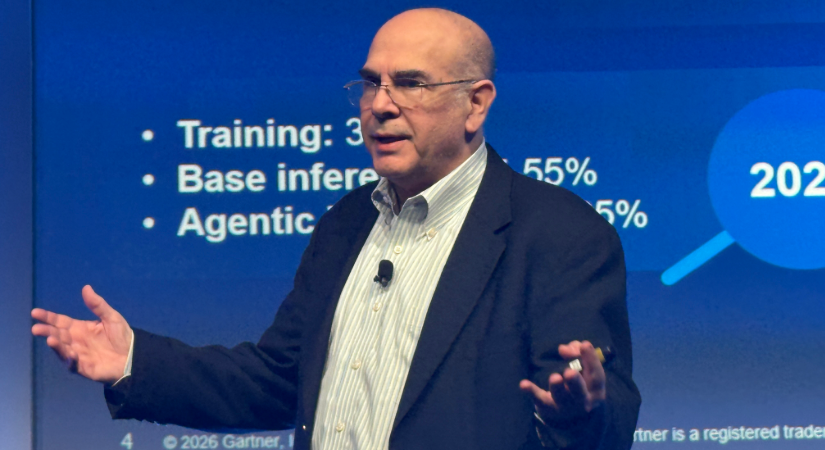
Presented by David Smith, Distinguished VP Analyst, Gartner
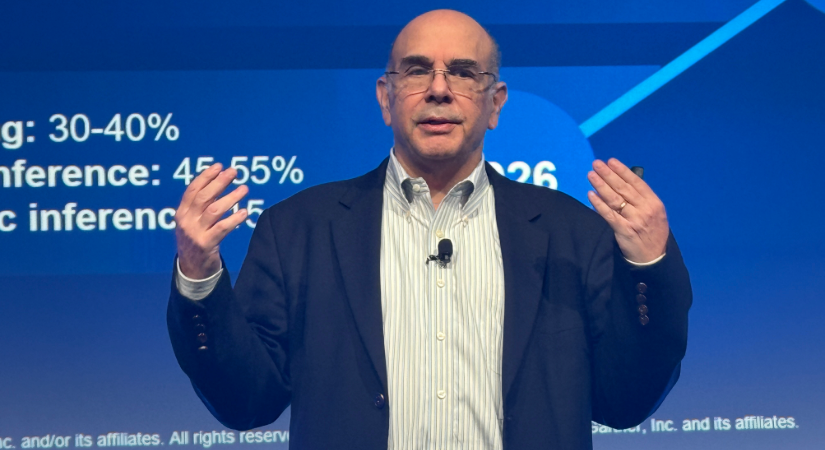
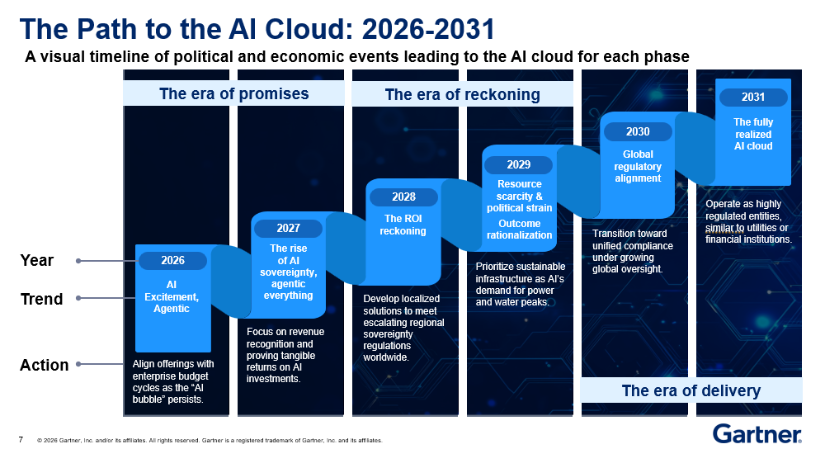
As cloud computing enters its 20th year, it is being surpassed by AI as the biggest trend in IT. In this session, David Smith, Distinguished VP Analyst at Gartner explained, how the future of cloud and AI are intertwined and how Gartner thinks this will evolve over the next five years.
Key Takeaways
“The relationship between AI and the cloud is deeply intertwined. Cloud platforms provide the elastic infrastructure needed for both training large models and serving them at scale, democratizing access to AI capabilities.”
“By 2031, AI will place more of a spotlight on multicloud as models will be sourced from environments different from where the data is and where they will ultimately run. More than half of all enterprises will have this profile.”
“By 2031, the majority of enterprises will separate their AI model training and inference, sometimes utilizing different cloud providers for each to optimize performance, compliance and cost, an approach that is currently adopted by fewer than one in five organizations.”
“Data gravity will be a cloud/AI strategy principle cited in a majority of enterprises’ cloud strategies. The concept of data gravity - where data’s location significantly influences application and service placement - will become a central tenet in cloud and AI planning for most enterprises by 2031.”
Journalists can receive additional information and/or request an interview with David Smith by contacting Matt LoDolce at matt.lodolce@gartner.com.
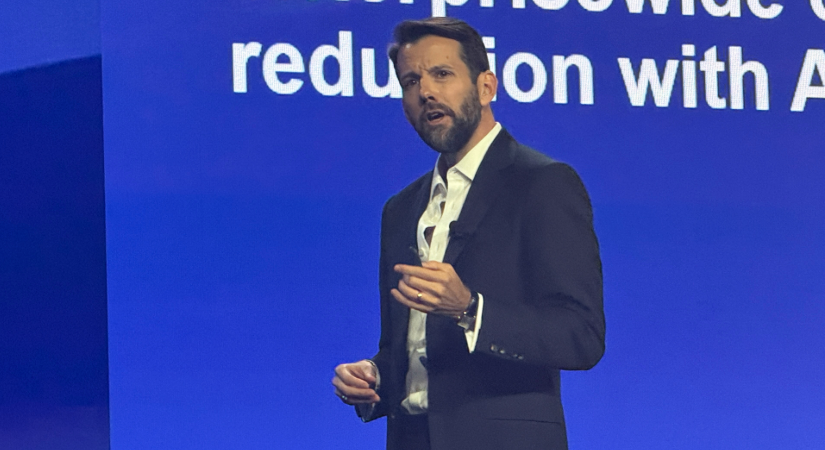
How AI (Actually) Cuts Costs
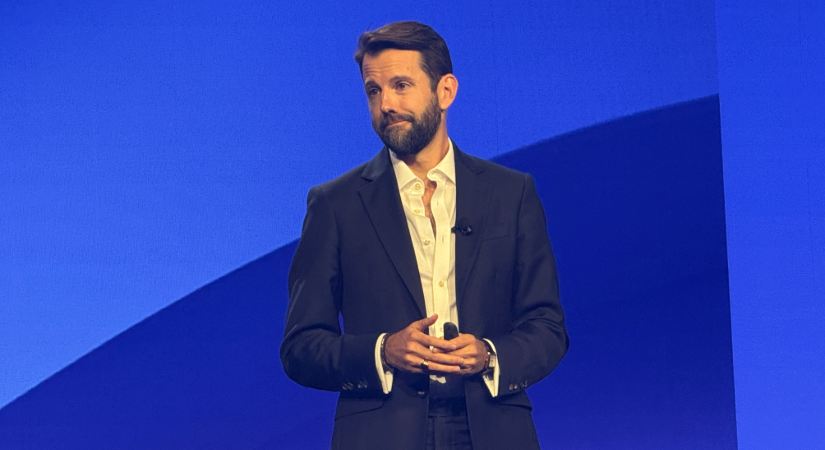
Presented by Nate Suda, VP Analyst, Gartner
Cost reduction is one of the most closely scrutinized promises of AI. Yet Gartner research examining 1,010 non-technology companies in the S&P1200 found that just 4% reported AI-enabled cost reduction or related financial change material enough for company-level disclosure in the first half of 2026. In this session, Nate Suda, VP Analyst at Gartner, discussed where AI is changing the economics of business and what executives must do to turn that opportunity into financial results.
Key Takeaways
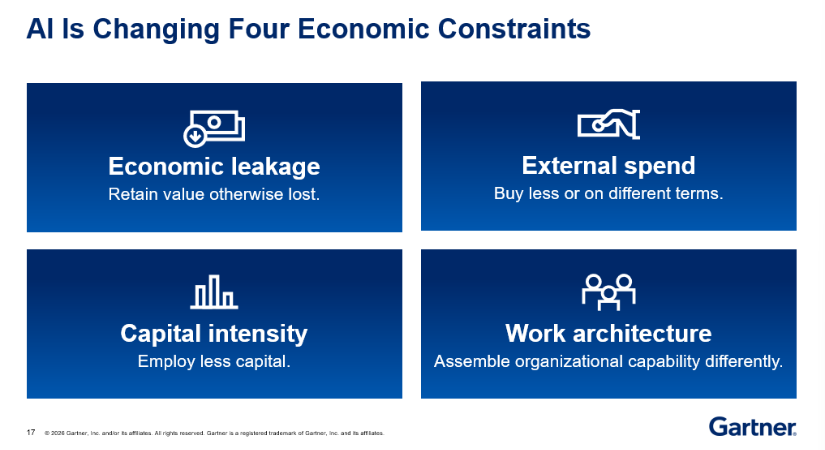
“AI cuts costs when new capability changes the constraint that made the cost economically necessary.”
“AI is creating four recurring opportunities for structural financial change: preventing losses that companies previously had to accept, buying less external capability or buying it on different terms, employing less capital, and organizing work differently.”
“Executives must apply three tests to identify where AI can materially reduce costs:
The constraint test: what makes this cost necessary, and can AI change it?
The conversion test: what must happen for the economic base to change?
The claim test: what financial result can the organization credibly claim?”
Journalists can receive additional information and/or request an interview with Nate Suda by contacting Matt LoDolce at matt.lodolce@gartner.com.
That's a wrap for Gartner IT Symposium/Xpo in Orlando. Until next year!
Media contact
Matt LoDolce
Gartner
Matt.LoDolce@gartner.com
Kristen Anderson
Gartner
Kristen.Anderson2@gartner.com


Latest releases
About Gartner
Gartner (NYSE: IT) delivers actionable, objective business and technology insights that drive smarter decisions and stronger performance on an organization’s mission-critical priorities. To learn more, visit gartner.com.