Orlando, Fla., May 6, 2026
- Gartner client? Log in for personalized search results.
Gartner Supply Chain Symposium/Xpo 2026 Orlando: Day 3 Highlights
Overview
We are bringing you news and highlights from the Gartner Supply Chain Symposium/Xpo, taking place this week in Orlando, Florida. Below is a collection of the key announcements and insights coming out of the conference.
On Day 3 from the conference, we are highlighting sessions on AI in supply chain, emerging logistics and warehousing technologies and agentic AI in supply chain planning. Be sure to check this page throughout the day for updates.
Key Announcements
Signature Series: Pathways to Progress for AI in Supply Chain
Presented by Tess Frenzel, Director Analyst, Gartner
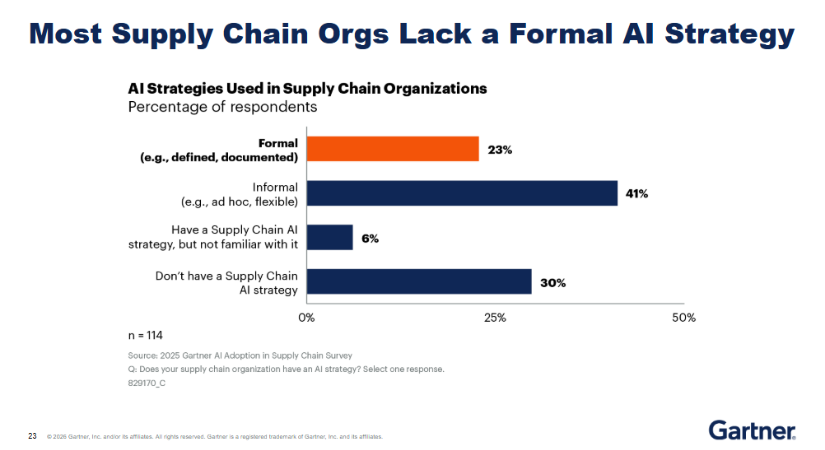
As supply chain leaders face pressure to prove near-term returns from AI while also using it to transform operations, success depends on balancing both demands at once. In this session, Tess Frenzel, Director Analyst at Gartner, offered insights into AI-driven supply chain technology trends and highlighted the approaches organizations can balance to deliver value.


Key Takeaways
“Supply chain leaders must move from siloed, project-by-project AI investments to a ‘principled bets’ strategy that balances short-term efficiency gains with longer-term transformation.”
“Low data quality remains the top barrier to scaling AI, making it critical to move from BI-oriented data foundations to AI-ready data that is connected, contextualized and continuous.”
“AI can help narrow the insights curve by improving data quality, orchestrating fragmented systems and expanding access through natural language interfaces, but people still define the semantic layer, governance rules and operating assumptions.”
“In the near-term, to improve returns from AI adoption, CSCOs should shift from encouraging experimentation to working with their leadership teams to provide clear guidance and expectations on how employees can best use AI in their workflows.
In the long-term, supply chains must begin to shift to an AI-native operating model, in which workflows, roles, and orgs are designed to amplify the impact of AI.
Journalists can receive additional information and/or request an interview with the Gartner analyst by contacting Justin Lavelle at justin.lavelle@gartner.com.
Surfing the Hype Wave: How to Navigate Emerging Logistics Technologies
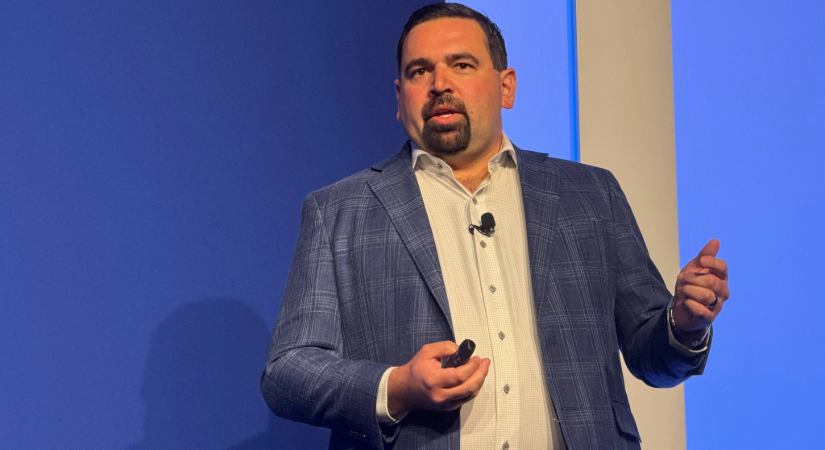
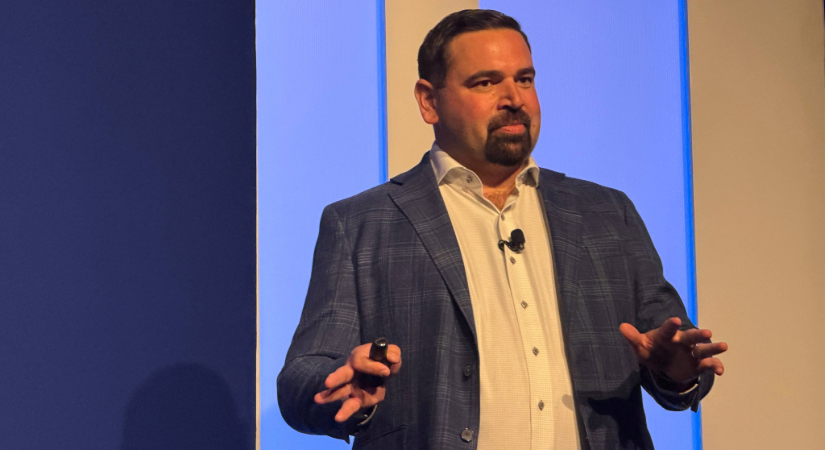
Presented by Nathan Lease, Senior Director Analyst, Gartner
As logistics leaders face rising pressure to invest in emerging technologies while proving faster ROI, the priority is to separate hype from practical value. In this session, Nathan Lease, Senior Director Analyst at Gartner, shared insights from Gartner’s Hype Cycle by highlighting which innovations position organizations for success.
“Over 80% of supply chain leaders expect funding increases, with AI the top investment, but only 20% of warehousing and transportation AI initiatives achieve their goals.”
“Leaders should match technologies in the Hype Cycle to their organization’s risk appetite, with earlier-stage technologies better suited to more risk-tolerant adopters and mature technologies better suited to more cautious ones.”
“Labor constraints, labor costs and capital pressure are accelerating interest in automation, and intralogistics smart robots stand out as a practical area to prioritize through targeted use cases rather than broad experimentation.”
“Technology decisions should be driven by business challenges rather than FOMO, with logistics leaders first assessing operational complexity and then matching the right foundational or emerging tools to those needs.”
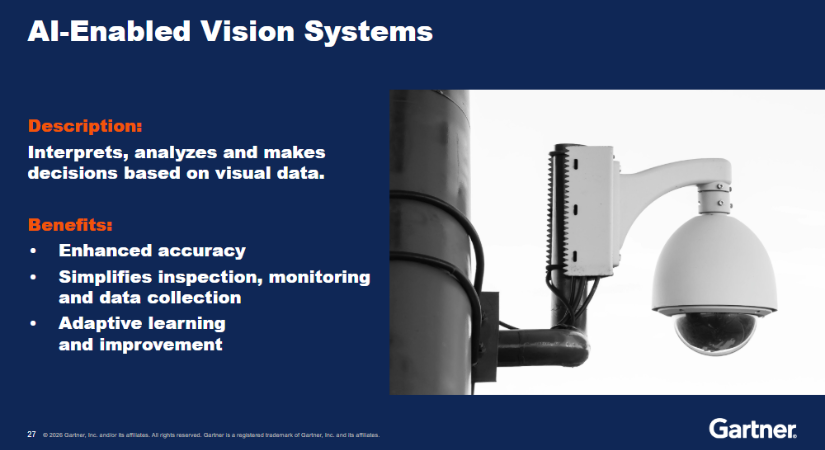
“AI can help address logistics complexity through use cases, such as vision systems, logistics network visibility, warehouse resource planning and orchestration, but organizations should weigh benefits, risks and timelines carefully before moving into more nascent areas, such as agentic AI.”
Journalists can receive additional information and/or request an interview with the Gartner analyst by contacting Justin Lavelle at justin.lavelle@gartner.com.
How to Prepare for Agentic AI Future in SC Planning
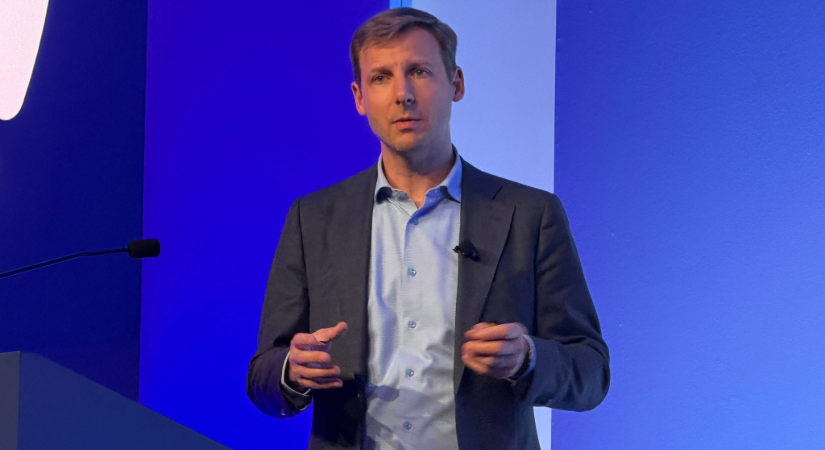
Presented by Jan Snoeckx, Senior Director Analyst, Gartner
Agentic AI is shaping the future of supply chain planning. In this session, Jan Snoeckx, Senior Director Analyst at Gartner, shared practical guidance on readiness steps and highlighted how leaders can strategically position their planning function for success in an AI-driven world.

- “In supply chain planning, agentic AI is not simply another form of automation; it represents systems that understand goals, interpret context and continuously recalibrate planning flows as conditions change, making preparation for this shift an immediate leadership priority.”
“Future supply chain planning agents will depend on neuro-symbolic approaches that combine machine learning, optimization, heuristics, simulation and generative AI.”
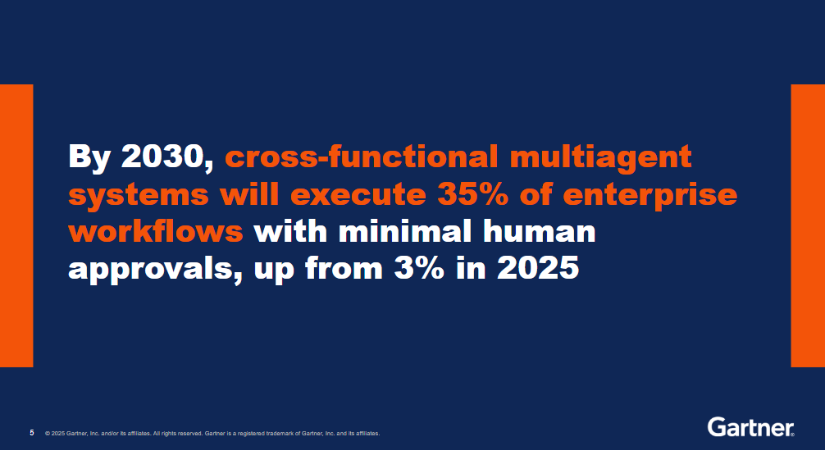
“By 2030, cross-functional multiagent systems will execute 35% of enterprise workflows with minimal human approvals, up from 3% in 2025. This will require planning leaders to rethink workflow ownership, governance and oversight as more repetitive and rules-based work shifts to agents.”
“Organizations should focus their investments on the sweet spot for AI agents: medium-to-high complexity planning use cases involving dynamic tasks and environments with manageable risk, while avoiding both overly simple and complex use cases.”
- “To prepare for the autonomous business, supply chain planning must become more decision-centric by elevating scenario planning through intelligent simulations, relying more on predefined policies, and strengthening the organization design, talent and governance needed to guide agentic AI effectively.”
Journalists can receive additional information and/or request an interview with the Gartner analyst by contacting Justin Lavelle at justin.lavelle@gartner.com.
That's a wrap! See you next year.


About Gartner
Gartner (NYSE: IT) delivers actionable, objective business and technology insights that drive smarter decisions and stronger performance on an organization’s mission-critical priorities. To learn more, visit gartner.com.