Outdated structures weaken cyber performance. Apply four principles to drive clarity, stability and results.
- Gartner client? Log in for personalized search results.
Fix cybersecurity structure before changing your organization chart
CISOs face relentless pressure to protect against evolving threats while supporting shifting business priorities. Fifty-five percent cite outdated cybersecurity structures as the top impediment to fulfilling their mandate and achieving a strong cybersecurity posture, and 60% have already created new teams and functions to keep up. The real problem? Most reorganizations are reactive, focused on reporting lines, not on how work actually gets done.
Gartner insights show that structural changes alone rarely solve performance gaps. Instead, they often introduce confusion, bottlenecks and change fatigue. To break this cycle, CISOs must adopt four essential organizational redesign principles that create clarity, stability and context‑aligned execution.
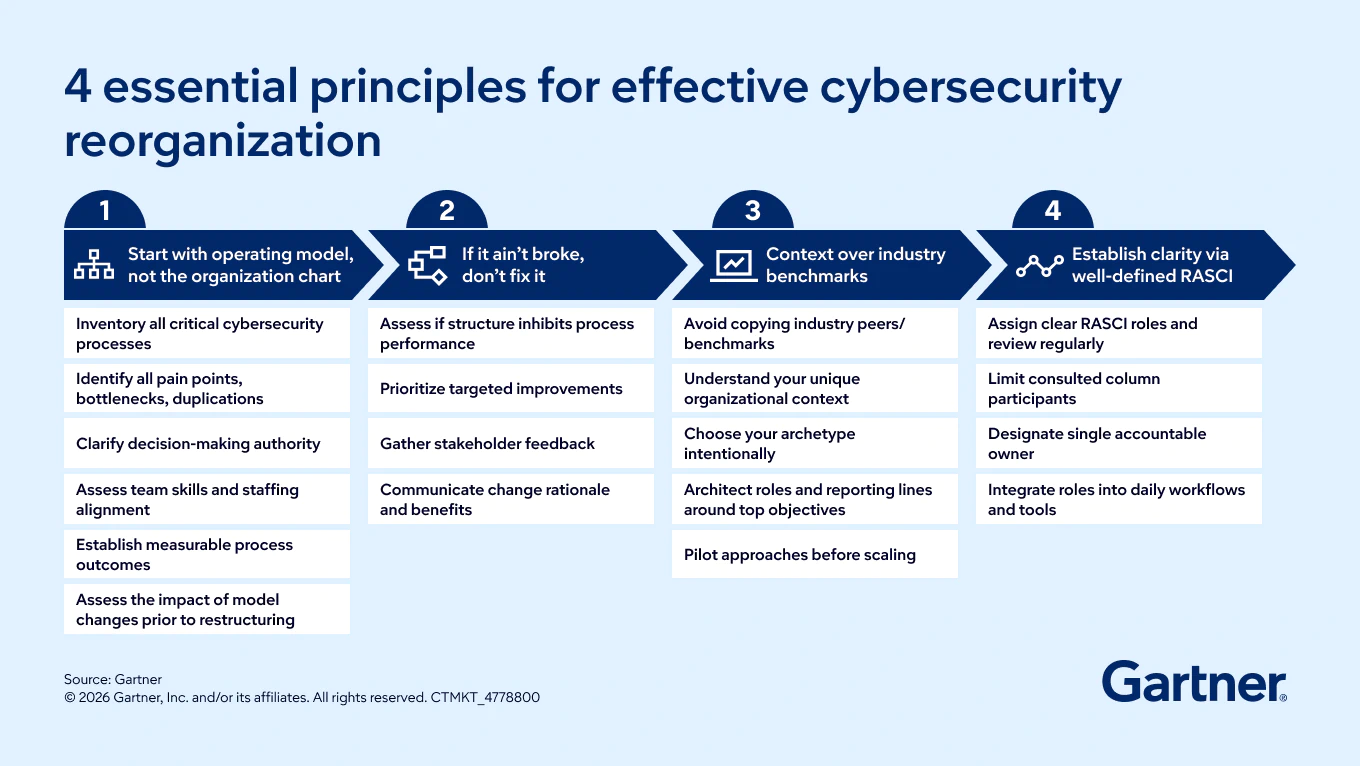
Four essential principles for cybersecurity reorganization
Before you reorganize, step back and reassess. These four principles help drive effective results and reduce friction.
Start with the operating model, not the organization chart
Jumping straight to structural changes is a trap. Your operating model — how cybersecurity capabilities deliver on operational and strategic objectives — should be the foundation. Begin by inventorying critical processes, from incident response to compliance reporting. For each, define the minimum steps, decision points, process flow and key participants. Avoid exhaustive documentation that slows progress.
Pinpoint bottlenecks, unclear handoffs or unofficial owners. Clarify who has authority at each stage. Assess if team sizes and skills match process needs. Only after outlining the impact of changes on other elements of your operating model should you alter the organization chart. This ensures structure supports how work gets done, not the other way around.
If it isn't broken, don’t fix it
Not every performance gap is a structure problem. Many issues stem from process, tooling or governance, not the organization structure. Before reorganizing, use metrics, KRIs and diverse stakeholder feedback to confirm if structure is truly the culprit. Focus on continuous improvement if your model is delivering results.
Restructure only when there’s a material scope change, persistent domain failure or accountability gaps that governance tweaks can’t fix. Even then, make changes targeted and evidence-based, and always communicate the rationale and expected benefits clearly to your teams.
Design for business context, not industry benchmarks
Imitating peer organization structures rarely works. Every business has unique models, risks and cultures. According to Gartner, context-driven design outperforms standardized organization charts. Choose your archetype (centralized, federated or hybrid) based on your strategic objectives, risk tolerance, regulatory needs, culture and business priorities.
Collaborate with business, IT and key stakeholders to ensure alignment and buy-in. Test new structures in high-change areas before scaling. This approach builds organizations that are effective and adaptable, not just compliant.
Establish clarity and accountability with a formal RASCI model
A well-defined RASCI (responsible, accountable, supporting, consulted, informed) model is essential. Many CISOs overlook this step or overcomplicate it. Start with incident response and vulnerability management, as these touch the most stakeholders and reveal the most friction.
Assign single accountable owners, limit “consulted” roles to what matters and keep RASCI charts practical. Integrate RASCI into daily workflows and review roles annually. When everyone knows their part, decisions accelerate and nothing falls through the cracks.
Make your next reorganization count — action steps for CISOs
Ready to redesign your cybersecurity function? Here’s how to start:
Inventory and map all key cyber processes and pain points.
Confirm whether organizational structure is the real issue — don’t assume.
Design your organization to fit your business needs, not peer examples.
Build and maintain a clear, actionable RASCI model.
Communicate changes and expected benefits up front with all relevant stakeholders.
CISOs who apply these four principles avoid frequent, ineffective cybersecurity reorganizations and change fatigue. They build stable, business-aligned teams that deliver consistent results, even as threats and priorities evolve. When structure, context and accountability align, cybersecurity becomes a true business enabler.
Cybersecurity reorganization FAQs
What’s the biggest mistake CISOs make in cybersecurity reorganization?
The most common mistake is redesigning the organization chart before fixing the operating model. Gartner insights show that this approach rarely addresses root problems and often creates new confusion and friction. CISOs should first clarify and define processes, decision rights and accountability, and then adjust organizational structure only if, and where, it is truly needed.
How does a RASCI model help with cybersecurity structure?
A RASCI model clarifies who is responsible, accountable, supporting, consulted and informed for each key process. Gartner shows that well-implemented RASCI reduces confusion, speeds decisions and ensures nothing is missed. Integrate the RASCI into daily workflows and review regularly to increase effectiveness.
Should CISOs model their cybersecurity organization structure based on industry/peer benchmarks?
No. Gartner insights reveal that context-driven design, tailored to your business’s risk profile, culture and priorities, delivers better results than copying peers. Industry benchmarks can provide useful reference points, but your cybersecurity organization structure must be designed to fit your unique environment.
Attend a Conference
Accelerate growth with Gartner conferences
Gain exclusive insights on the latest trends, receive one-on-one guidance from a Gartner expert, network with a community of your peers and leave ready to tackle your mission-critical priorities.

Drive stronger performance on your mission-critical priorities.