SYDNEY, Australia, 24 March, 2026
- Gartner client? Log in for personalized search results.
Gartner Finance Symposium/Xpo Sydney 2026: Day 2 Highlights
Overview
We are bringing you news and highlights from the Gartner Finance Symposium/Xpo 2026, taking place this week in Sydney. Below is a collection of key announcements and insights coming out of the conference. You can read the highlights from Day 1 here.
On Day 2 of the conference, we are highlighting sessions that help finance leaders navigate economic uncertainty with adaptive scenario planning; understand how AI is reshaping roles in accounting; and how to align finance technology investments with organizational strategy.
Key Announcements
Navigate Economic Uncertainty With Adaptive Scenario Planning
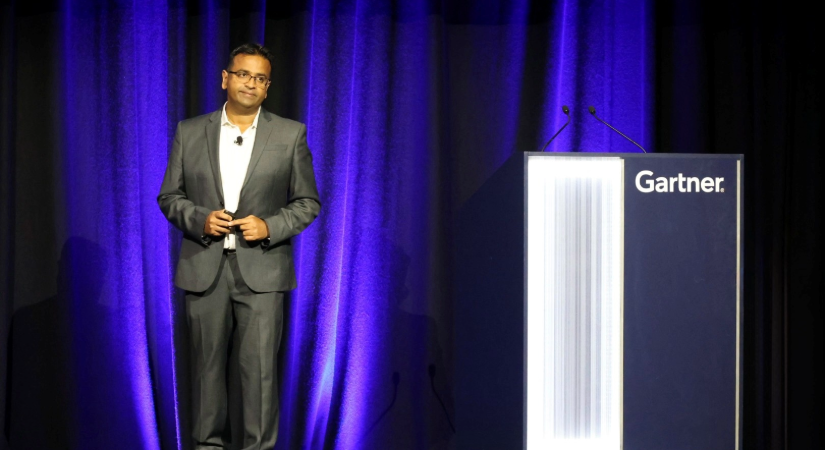
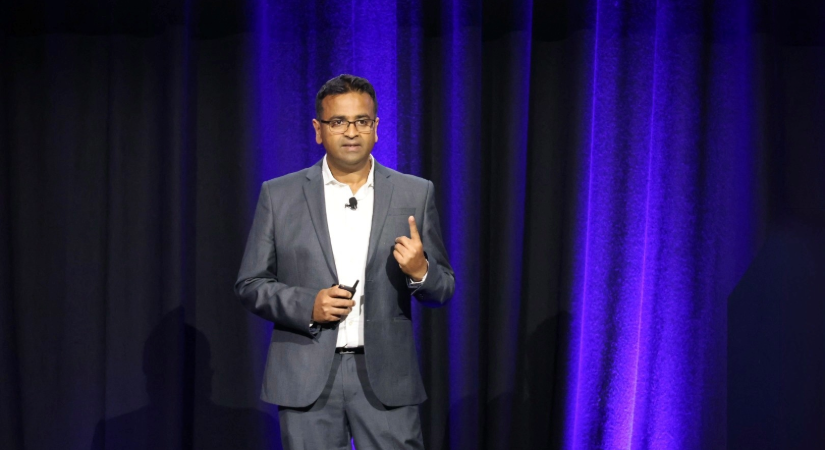
Presented by Sid Sahoo, Sr. Director Analyst at Gartner
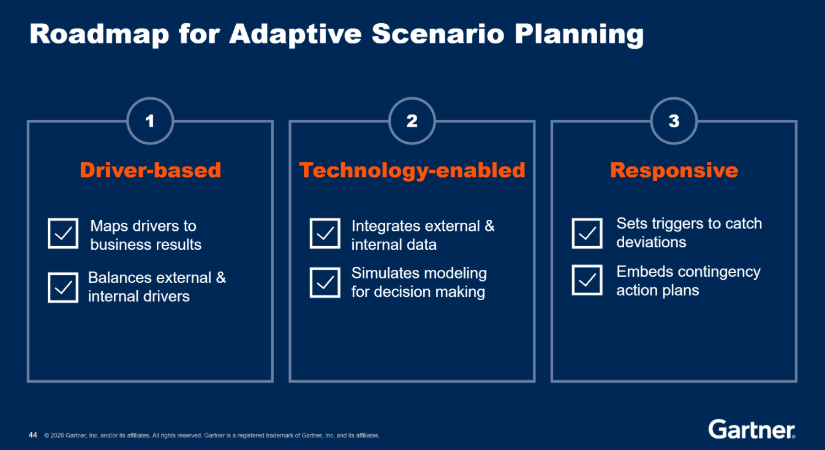
In this session, Sid Sahoo, Sr. Director Analyst at Gartner, explained how CFOs should deploy adaptive scenario planning, focusing on key external and internal business drivers. Unlike traditional scenario planning that often creates fixed plans for a set of possible future outcomes, this method cuts through data noise, providing early warnings and enables rapid adjustments to forecasts in volatile markets.
Key Takeaways
- Deploy a new approach to scenario planning: Static, internally focused models cannot keep pace with the rapid shifts in external drivers, such as tariffs, geopolitical risks, and technology changes that organizations face today.
- Adopt adaptive, driver-based scenario planning for greater agility: Finance teams should build scenario models around both internal and external business drivers, prioritizing those with the greatest impact on performance.
- Leverage technology to automate scenario modeling: 50% of finance teams still build models in Excel. Instead, they must integrate financial, operational, and external data directly into modern planning tools to streamline scenario creation and model updates.
- Implement trigger-based reviews for responsive decision-making: Move away from fixed, calendar-based reviews to monitoring for specific triggers, like shifts in market share or major cost changes, that prompt immediate scenario reassessment and action.
Journalists can receive additional information and/or request an interview with the Gartner expert by contacting Rob van der Meulen at rob.vandermeulen@gartner.com
Designing the AI-Ready Accounting Function
Presented by Hilary Richards, VP Analyst at Gartner
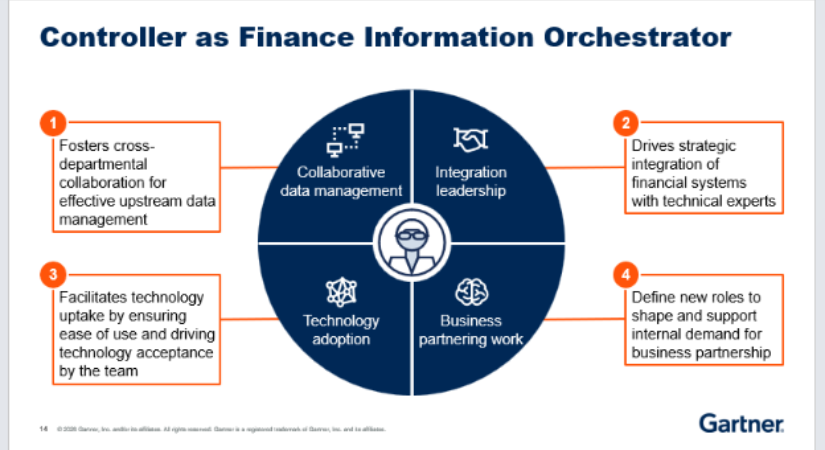
Rapid advancements in AI have huge implications for the accounting function. In this session, Hilary Richards, VP Analyst at Gartner, explained how the controller role and the accounting organization structure will shift to harness AI, and how finance leaders can rapidly upskill their teams to respond.


Key Takeaways
- Extend AI-ready accounting into automated, continuous processes: In an AI-ready function, most accounting activities, from reconciliation, to adjustment and financial reporting, are driven by machines, enabling a continuous or on-demand close.
- Recognize digital talent and upskilling as essential: By 2030, 90% of finance talent will need digital skills, with accountants expected to build, manage and optimize technology tools.
- Embrace new accounting roles and team structure: New technology-first roles—such as model builders and AI investigators—will be needed to develop, monitor and improve AI systems.
- Evolve controllers into finance information orchestrators: Controllers must lead technology adoption and partner closely with IT and upstream data sources, focusing on data flow, system integration and technology acceptance.
- Accelerate AI adoption through hands-on experimentation and tailored upskilling: This approach helps employees apply AI to real work challenges and supports career growth.
Journalists can receive additional information and/or request an interview with the Gartner expert by contacting Rob van der Meulen at rob.vandermeulen@gartner.com
Align Finance Technology Investments with Organizational Strategy
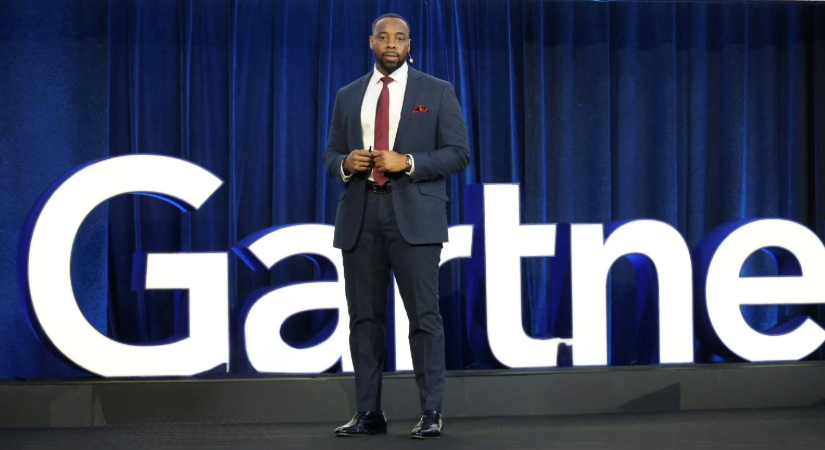
Presented by Marcus X. Marion, Sr. Director Analyst at Gartner
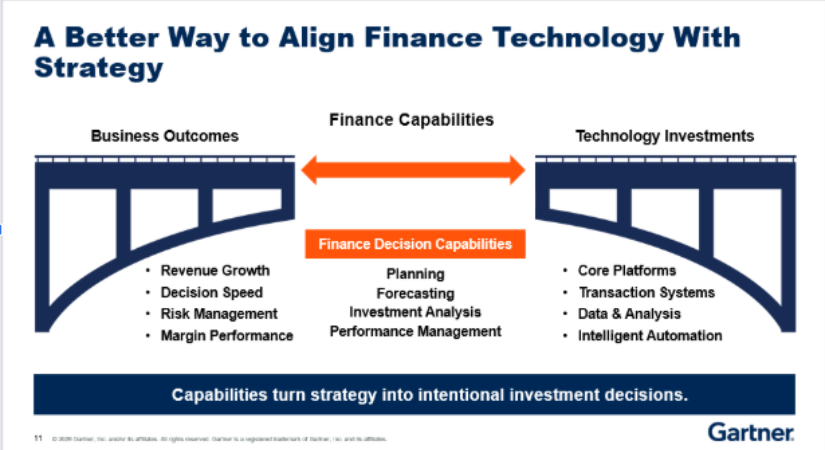
When CFOs evaluate investments in platforms, systems, analytics and automation, they must focus on how those investments strengthen the business capabilities that drive critical outcomes. In this session, Marcus X. Marion, Sr. Director Analyst at Gartner, explained that many finance technology investments fail to deliver expected outcomes because they are made system-by-system rather than managed as a portfolio.

Key Takeaways
- Lead technology decisions with business outcomes, not tools: Start by defining the outcomes finance must deliver, such as profitability, liquidity, and decision velocity, and anchor technology investments to those goals.
- Use finance capabilities as the connector between strategy and technology by mapping and prioritizing the finance capabilities needed to achieve outcomes.
- Evaluate systems across outcome alignment, architecture readiness, and economic sustainability to identify gaps to avoid technology drift and misalignment.
- Allocate resources differently for core, differentiated, and innovative capabilities, prioritizing reliability for core, competitive advantage for differentiated, and time-boxed experimentation for innovation.
- Finance and IT leaders should use capability maps and portfolio health assessments to guide decisions and regularly review the portfolio to ensure technology investments remain intentional and strategic.
Journalists can receive additional information and/or request an interview with the Gartner expert by contacting Rob van der Meulen at rob.vandermeulen@gartner.com
That's a wrap for Gartner Finance Symposium/Xpo in Sydney. Until next year!


About Gartner
Gartner (NYSE: IT) delivers actionable, objective business and technology insights that drive smarter decisions and stronger performance on an organization’s mission-critical priorities. To learn more, visit gartner.com.