LONDON, U.K., October 8, 2026
- Gartner client? Log in for personalized search results.
Gartner HR Symposium/Xpo, London: Day 3 Highlights
Overview
We are bringing you news and highlights from the Gartner HR Symposium/Xpo concluding today in London, U.K. Below is a collection of the key announcements and insights coming out of the conference. Here’s a summary of happenings from Day 1 and Day 2.
On Day 3 from the conference, we are highlighting performance management, elevating your AI agent roadmap, managing spans of control, and deciding which managerial tasks to automate.
Key Announcements
- Gartner Says CHROs’ Top Priorities for 2027 Focus on Meeting CEOs' Expectations While Minimizing Organizational Risk
- Gartner Survey Finds Only 38% of CHROs and CIOs Share an Understanding of How AI Impacts the Future of Work
- Gartner HR Research Reveals Fewer Than 35% of Employees Report Good Levels of Overall Wellness
Hidden Drag: Why Performance Management Isn’t Driving A Culture of High Performance
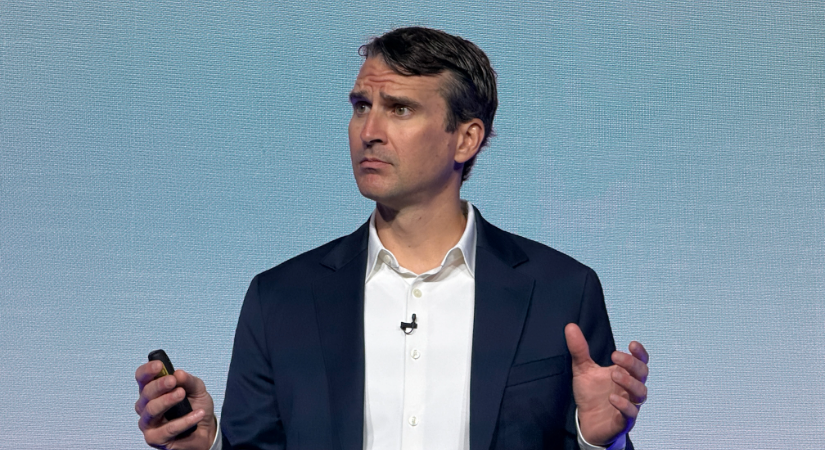
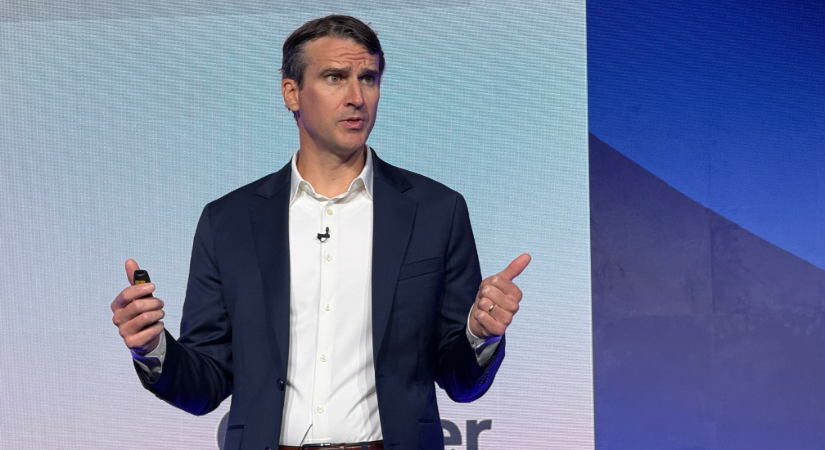
Presented by Tony Guadagni, Director Analyst, Gartner
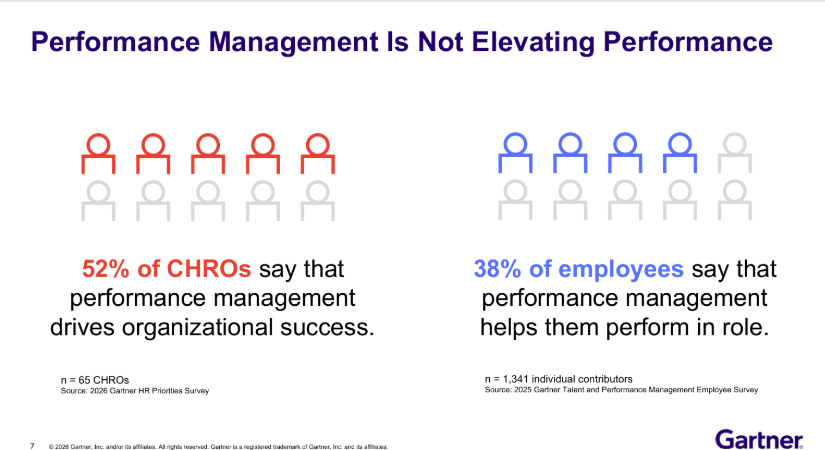
Executives demand a high-performance culture as a shield against economic instability, yet only 39% of CEOs believe their workforce is productive enough. In this session, Tony Guadagni, Director Analyst at Gartner, examined how CHROs can rethink outdated performance management processes and build a workforce that is resilient enough for today’s high-pressure business environment.
Key Takeaways
- “Just 39% of CEOs and senior business execs say that current workforce productivity is sufficient to meet business goals, while only 38% of employees say that performance management helps them perform in their role.”
- “There are three challenges with performance management:
- Too tolerant of underperformance: 49% of CHROs report that their process effectively differentiates between core and low performance.
- Does not inspire high performance: Only half of employees believe performance impacts pay.
- Disconnected from day-to-day work: Just one-third of employees talk to their manager about performance at least monthly.”
- “HR can address these issues with performance management by taking the following actions:
- Changing the narrative on underperformance by supporting managers in identifying and addressing marginal performance.
- Disproportionately rewarding employees who make outsized contributions.
- Embedding meaningful performance conversations throughout the year.
Journalists can receive additional information and/or request an interview with Tony Guadagni by contacting Gerri Weinberger at gerri.weinberger@gartner.com.
Don't Risk Failure: 3 Essentials for Elevating Your AI Agent Roadmap
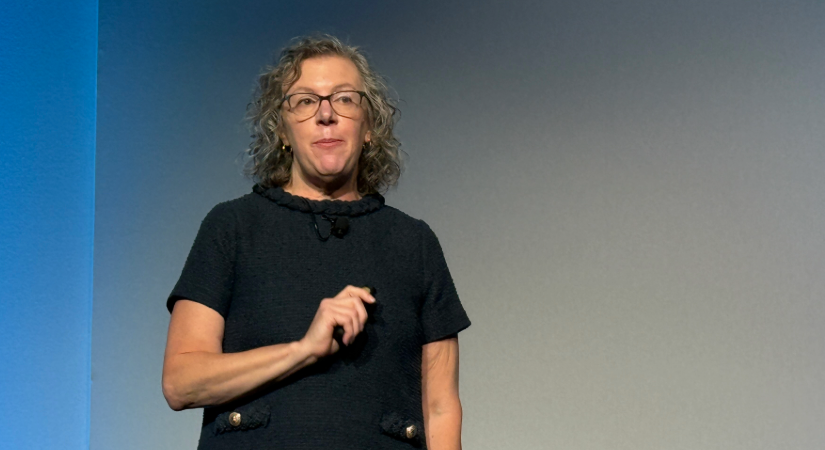
Presented by Stephanie Clement, Senior Director Analyst, Gartner
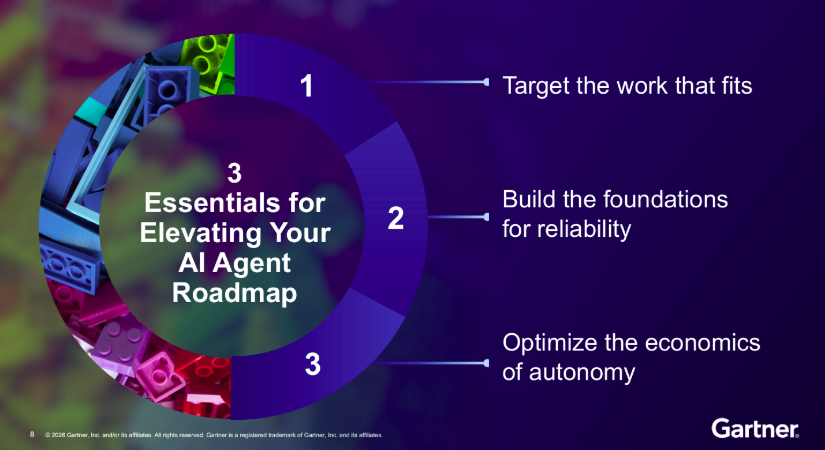
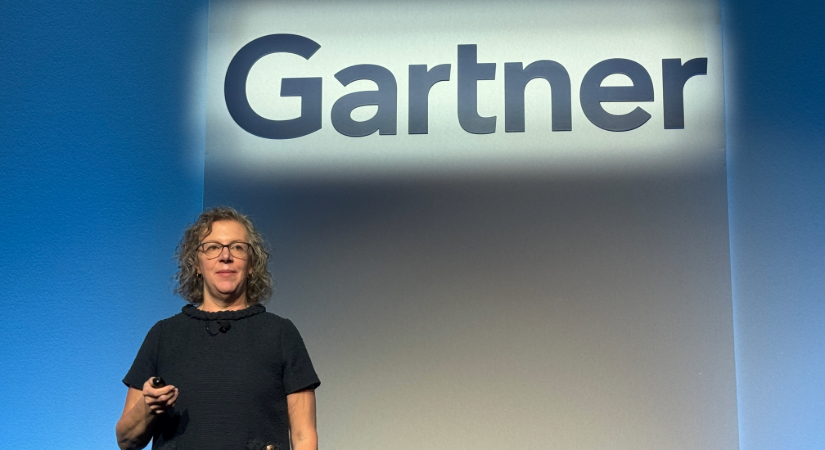
Excitement about AI agents in HR is rising, but jumping in unprepared can lead to costly mistakes. In this session, Stephanie Clement, Senior Director Analyst at Gartner, shared three areas that must be addressed for organizations to scale AI agents responsibly.
Key Takeaways
- “Despite the excitement surrounding agentic AI, only 14% of HR agentic AI initiatives are fully or highly successful.”
- “Not all AI agents are created equal: the more autonomy you give an agent, the more important readiness becomes.”
- “Organizations that have been successful with their AI initiatives start with the work, not the technology. They aren't trying to deploy an agent for everything but instead find work where autonomy creates meaningful value.”
- “Reliable AI agents require the right data, not just more data: Gartner research found that 56% of HR leaders report the top barrier to AI agent success is poor data quality.”
- “AI agents don’t simply charge you for employees and users; they charge you for outcomes and the complexity required to achieve them.”
Journalists can receive additional information and/or request an interview with Stephanie Clement by contacting Gerri Weinberger at gerri.weinberger@gartner.com.
Making Increased Spans of Control More Manageable
Presented by Ingrid Laman, Vice President Analyst, Gartner
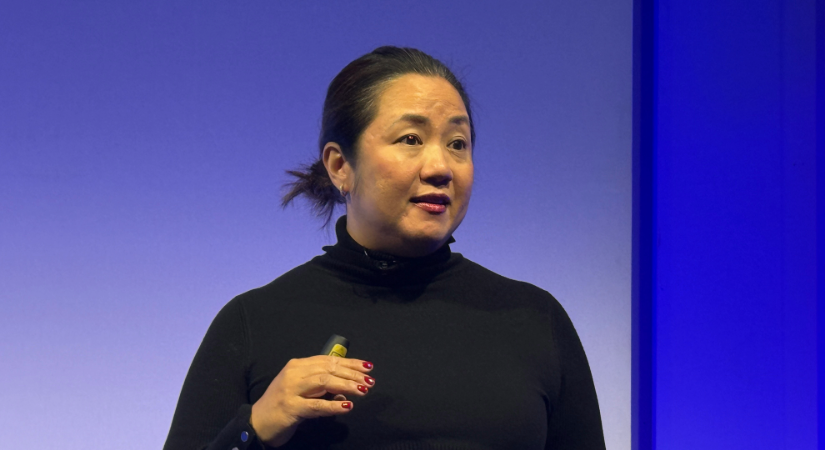
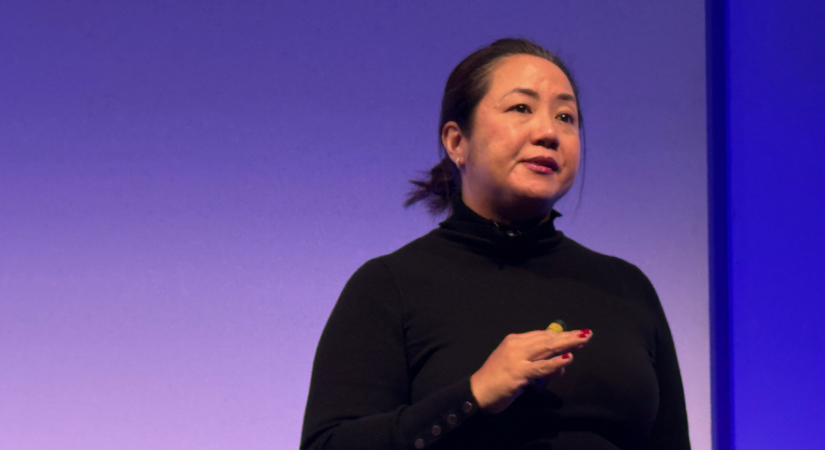
Classic span-of-control theory suggests that larger spans of control undermine manager effectiveness. In this session, Ingrid Laman, Vice President Analyst at Gartner, examined new Gartner research that challenges that assumption and shared how HR can help managers lead successfully at scale.
Key Takeaways
- “Manager spans of control will increase by 18.6% in the next 5 years.”
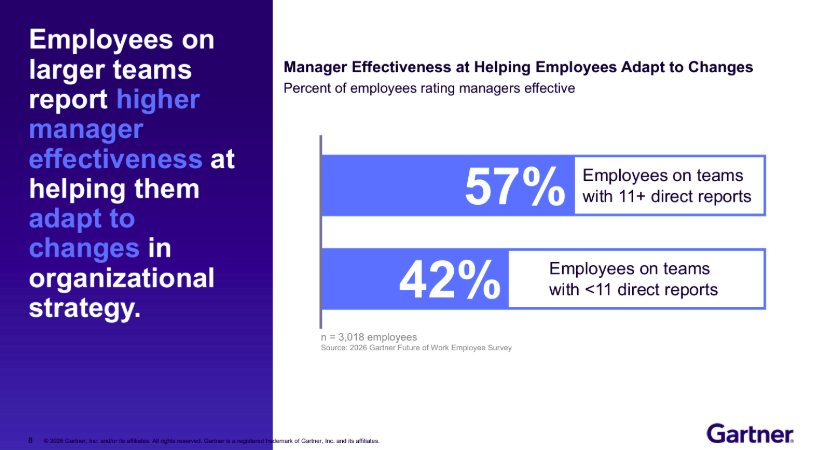
- “Employees on teams with 11 or more direct reports say they have stronger talent outcomes (e.g., enterprise contribution, engagement) than employees on smaller teams.
- “Employees on larger teams report higher manager effectiveness at helping them adapt to changes in organizational strategy, build new skills as their roles evolve, and find new ways to accomplish work with AI.”
- “Job manageability is 5 times more impactful than skill proficiency in improving manager effectiveness.”
- While managers have increased workloads, HR can help by assisting managers with scaling time and cognitive effort.
Journalists can receive additional information and/or request an interview with Ingrid Laman by contacting Gerri Weinberger at gerri.weinberger@gartner.com.
Managerial Tasks You Could, But Shouldn’t Automate
Presented by Carolina Engels, Senior Principal Analyst, Gartner
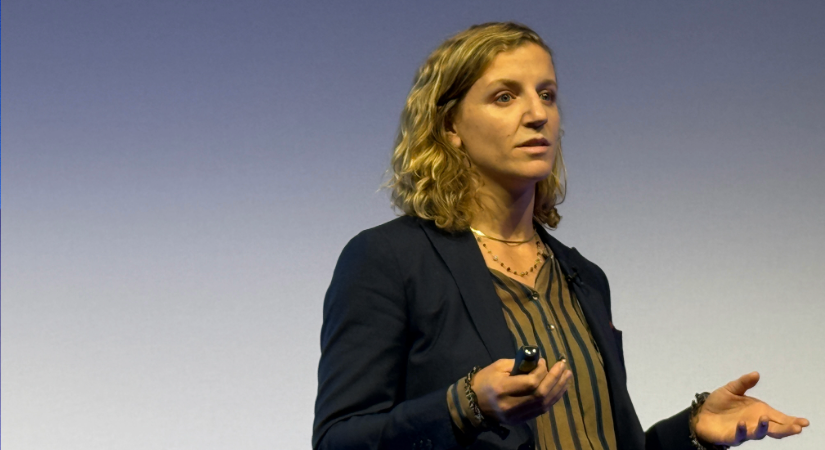
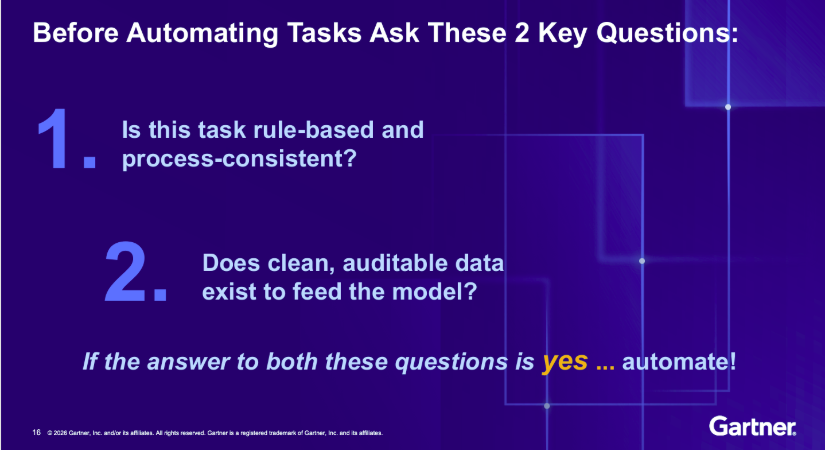
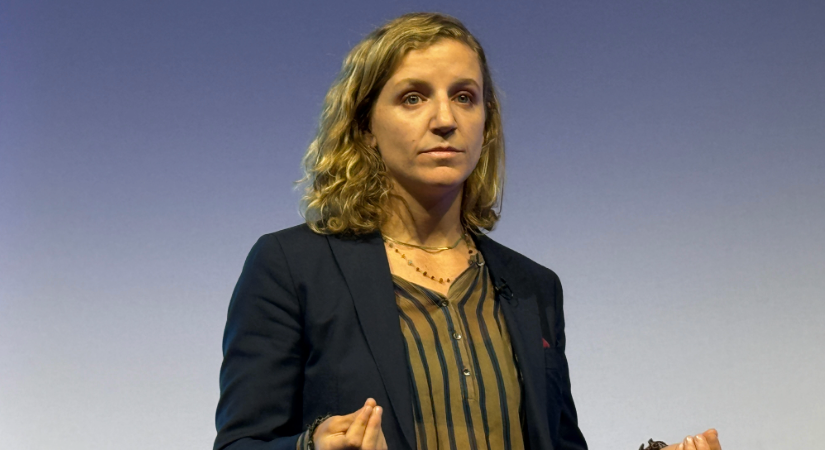
As AI transforms managerial work, organizations face a critical choice: not simply what can be automated, but what should remain human. In this session, Carolina Engels, Senior Principal Analyst at Gartner, explored why higher AI adoption is not automatically translating into higher manager effectiveness and offered a framework for identifying the managerial work that organizations should automate, augment, and protect.
Key Takeaways
- “Today, 79% of CHROs say managers are overwhelmed, and 1 in 4 managers would opt out of management if they could. That's not a capability problem; it's a job design problem.”
- “The goal of automation is protecting the work that creates value and meaning.”
- “HR should apply three strategic filters:
- Automate Tasks, Not Workflows. Organizations that strategically automate routine administrative task components are more likely to report higher enterprise contribution and discretionary effort.
- Protect Zone of Genius. Organizations should identify and protect the activities that create the greatest value and meaning for managers, including coaching, development, navigating ambiguity, and building trust.
- Beware of Interconnectivity. The question is what disappears when a task is automated. Organizations should assess second- and third-order effects before scaling automation.”
- “Gartner predicts that 75% of organizations that reduce middle-management headcount due to AI investments will rehire at least half of those roles by 2028.”
Journalists can receive additional information and/or request an interview with Carolina Engels by contacting Gerri Weinberger at gerri.weinberger@gartner.com.
That's a wrap for Gartner HR Symposium/Xpo in London. Until next year!
Media contact
Mary Baker
Gartner
mary.baker@gartner.com
Gerri Weinberger
Gartner
gerri.weinberger@gartner.com


Latest releases
About Gartner
Gartner (NYSE: IT) delivers actionable, objective business and technology insights that drive smarter decisions and stronger performance on an organization’s mission-critical priorities. To learn more, visit gartner.com.