Address emerging compliance risk management challenges and opportunities
- Gartner client? Log in for personalized search results.
Compliance Risk Management: Top 12 Hot Spots

Compliance Risk Management Insights for 2025
Rapid generative AI adoption, growing corporate self-regulation pressures, and expanding ESG third party reporting requirements are among the top risks that compliance leaders are prioritizing in 2025.
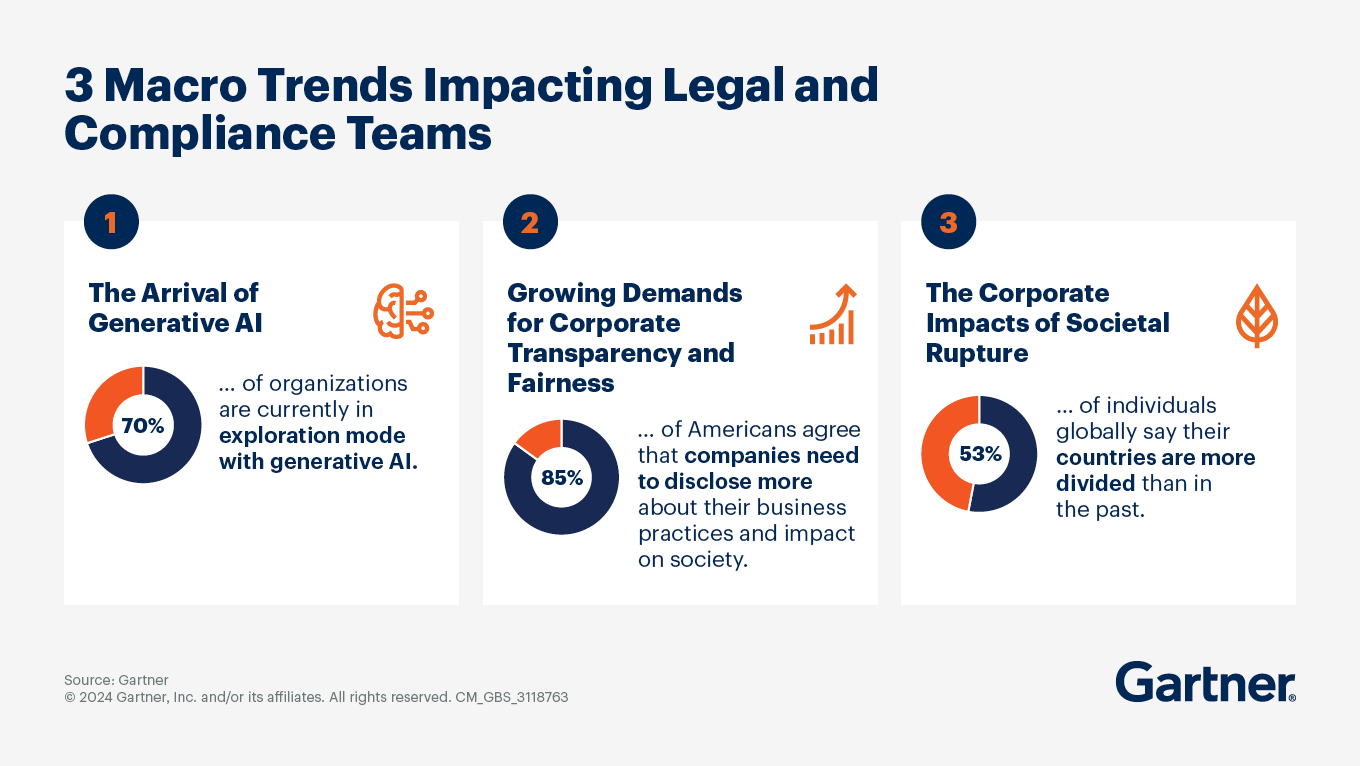
Download an excerpt of the "Compliance Hot Spots Report" to explore 12 risks and opportunities affecting compliance departments, driven by three key themes in the business environment:
- The arrival of generative AI
- Growing demands for corporate transparency and fairness
- The corporate impacts of societal rupture
About Compliance Risk Management
As generative AI transforms industries, compliance leaders must address intellectual property threats and adapt to emerging global AI regulations. This report emphasizes the importance of corporate transparency and fairness, urging leaders to engage with boards and senior leadership to drive enterprise-wide action.
Compliance departments face increasing pressures for self-regulation and must navigate complex M&A environments. The expanding role in cybersecurity and ESG reporting requires strategic responses to DOJ's compliance guidance and third-party risk management. As societal polarization grows, compliance leaders must manage conflicting expectations from stakeholders, ensuring ethical and legal compliance.
CCOs can steer their organizations through these compliance risk management challenges, fostering transparency and fairness while addressing evolving standards for consent and preference management.
Compliance Risk Management FAQs
What is compliance risk management?
Compliance risk management involves identifying, assessing, and mitigating risks related to legal and regulatory requirements. It ensures organizations adhere to laws and policies, minimizing potential legal liabilities.
How does generative AI impact compliance risk management?
Generative AI affects compliance risk management by introducing new intellectual property challenges. Compliance leaders must address copyright issues and adapt to evolving regulations surrounding AI technologies.
Why is corporate transparency important in compliance risk management?
Corporate transparency is crucial as it builds trust with stakeholders and aligns with increasing demands for fairness. It helps compliance leaders engage effectively with boards and senior leadership to drive enterprise-wide action.