Accelerate your transition and drive impact in the first 100 days
- Gartner client? Log in for personalized search results.
New Chief Compliance Officer: First 100 Days Toolkit

46% of executives across all functions underperform when making the leap to a new position.
At a time when the compliance officers are challenged to effectively manage the risks of modern business, new chief compliance officers need to find their feet fast and lead boldly.
Download the Gartner Toolkit for New Chief Compliance Officers to access:
- First 100 Days Guide for Chief Compliance Officers
- 2024 Leadership Vision for Chief Compliance Officers
- Compliance Score Maturity Assessment and Prioritization Tool
- Compliance Strategic Planning Guide and Template
- The Future of Compliance 2030
About the Chief Compliance Officer Role
The chief compliance officer role has evolved significantly in the past two decades. What began as a role focused on ensuring legal and regulatory compliance has evolved into an ethics stewardship role. This evolution was driven by an increasingly divergent stakeholder group throughout the 2000s and 2010s and a resultant increase in stakeholders’ expectations for ethical and purpose-driven business practices. The chief compliance officer role also gained increased autonomy and independence in the 2010s, and it now stands at a new threshold: a role focused on value creation as much as risk protection.
The chief compliance officer of the 2020s play a multifaceted role. They not only ensure compliance with fast-changing regulations but also support values-based commitments (particularly environmental, social and governance [ESG] programs), promote ethical culture in a hybrid work environment and manage third-party risks, among other responsibilities. This expansive mandate is a result of two primary factors:
- A multipolar risk environment (the result of pandemic-led rapid business transformation efforts, supply chain crises and geopolitical fragmentation), which has exposed outdated business processes and increased third-party risks.
- Increased pressure from new and divergent stakeholders, including activist consumers and employees, for organizations to do more to support ESG, corporate social responsibility (CSR) and diversity, equity and inclusion (DEI).
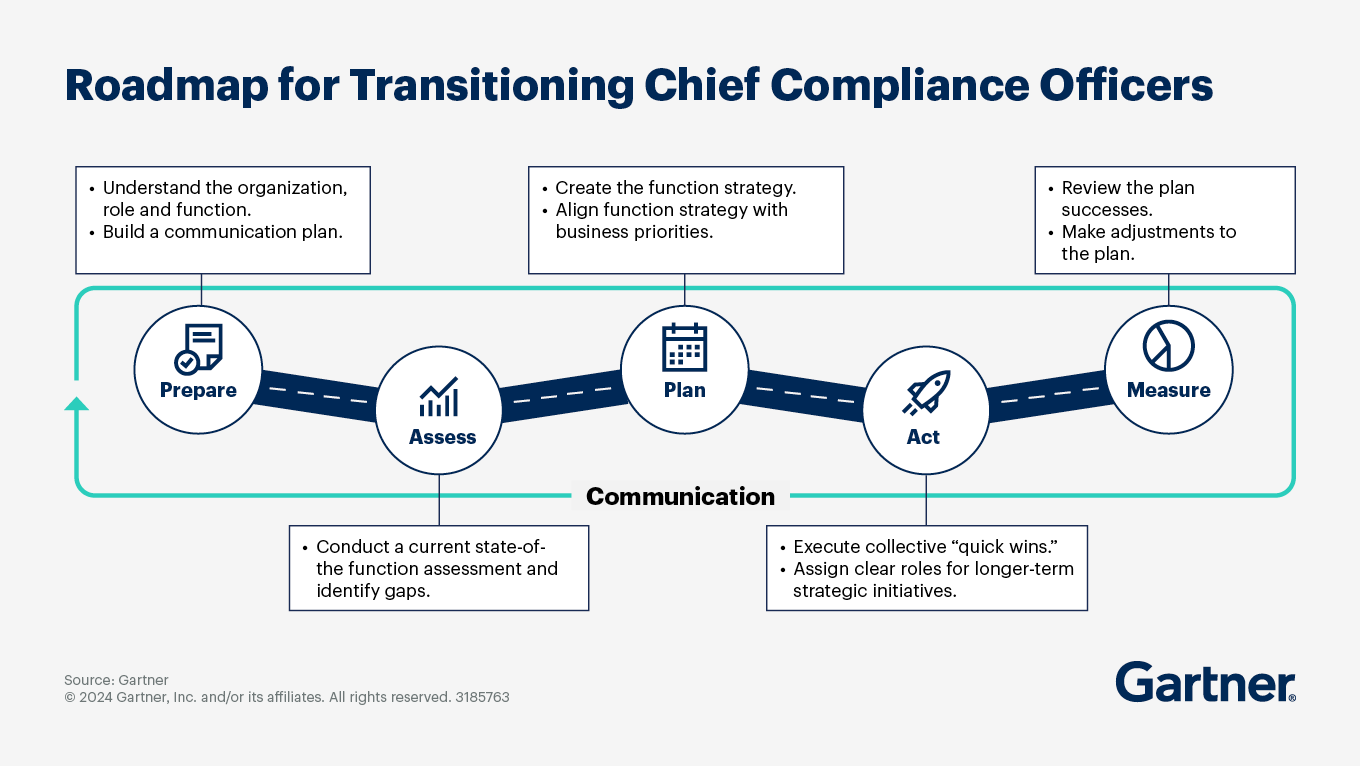
As the scope of compliance programs continues to expand, chief compliance and ethics officers must adapt their role to provide effective business support. This toolkit outlines the key steps and considerations you should undertake within your first 100 days of assuming the role.
Chief Compliance Officer FAQs
What is the role of the chief compliance officer?
Chief compliance officers (CCOs) are responsible for designing, implementing and monitoring the processes by which the company will comply with all applicable laws and regulations. This frees general counsel (GC) to take a more strategic legal and risk-tolerance approach.
What skills does a chief compliance officer need?
A successful CCO needs the skills to:
- Evaluate current compliance program activities and gauge their effectiveness and impact.
- Absorb data and analytics to evaluate the ongoing ROI of a program, while also identifying opportunities for program improvements and risk mitigation.
- Monitor third and fourth-party compliance activities, keeping in mind the realities of the organization’s newly extended enterprise.
Who is the chief compliance officer of today and tomorrow?
The CCO of today has expert capability to manage and implement strategic compliance programs, while still establishing processes for accountability and transparency, particularly in emerging and evolving risk areas, such as those associated with digital transformation.
CCOs of the future will need to have even greater management skills equipped to deal with changing global markets and the shifting legal requirements for organizations to fulfill their required compliance vital for business growth and corporate strategy.