Macroeconomic uncertainty threatening enterprise performance has led 76% of CEOs and senior business executives to pursue cost efficiency. It’s little surprise then that 71% of chief supply chain officers (CSCOs) cite short-term cost control as their top priority.
Pressure to deliver on supply chain cost performance expectations is nothing new for CSCOs: Only 54% described their supply chain organization’s cost targets over the past three fiscal years as achievable.
But the same economic headwinds that precipitated the CEO’s current mandate – namely tariffs and geopolitical instability – are significantly challenging CSCOs’ efforts, leaving only one in five (21%) feeling confident in their ability to deliver in the short term.
And the road ahead doesn’t look any clearer: Only 40% of CSCOs feel confident in their ability to secure the funding needed for long-term cost optimization initiatives. CFOs, by and large, agree with the sentiment: Just 39% say their CSCO has been effective in using capital investments to reduce supply chain costs.
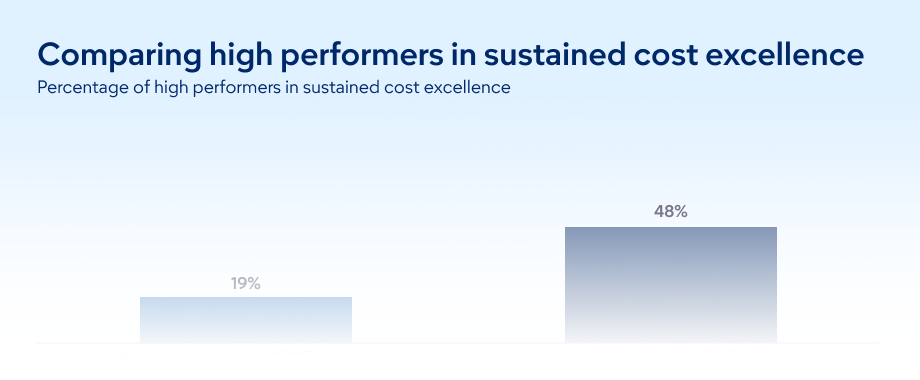
Still, there are some CSCOs successfully weathering the storm, outperforming their cost expectations and demonstrating sustained cost excellence. These supply chain leaders practice proactive cost management or “assertive advocacy”, and as a result, are more than twice as likely to be high performers on sustained cost excellence when compared to those who rely on consensus-building (see Figure 1).
Here we explore three keys to proactive supply chain cost management: