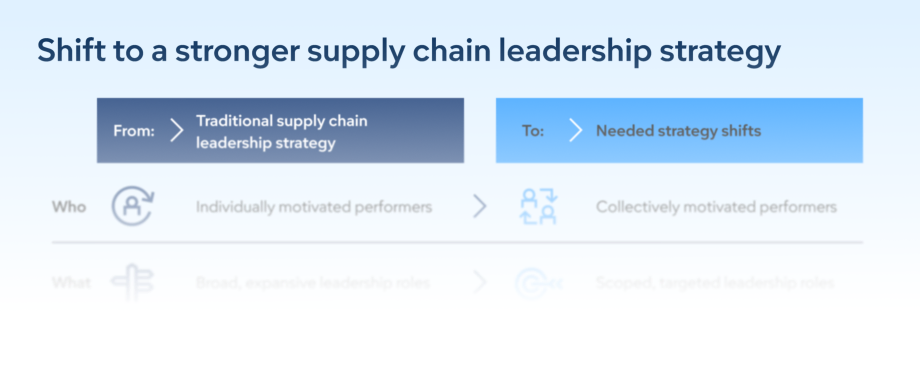
Leadership development has reached an inflection point. Traditional practices are failing to cultivate the strong leaders and pipelines that chief supply chain officers (CSCOs) need to deliver on strategic priorities.
Leadership turnover destabilizes operations. Fifty-four percent of supply chain leaders report leadership turnover disrupted their function’s ability to operate over the past three years.
External hires underperform. Two-thirds of supply chain leaders agree leadership roles are frequently filled by external hires that tend to underperform compared to internally promoted talent.
Leadership development programs are outdated. Just one-third of these programs are consistently refreshed, and less than half of supply chain leaders (48%) consider their curricula to be time-sensitive and tailored.
New technologies — AI in particular — are rapidly changing what’s needed and expected from leaders. The stakes for effective leadership development are rising. Many companies are reducing their middle management teams and expanding remaining leaders’ responsibilities, but this delayering of initiatives risks failure if executive turnover grows and leadership development practices remain stagnant.
A new approach is needed to build the supply chain leaders of tomorrow.