Chief supply chain officers (CSCOs) consider themselves effective leaders, with three-quarters giving themselves a score of at least 75 out of 100 when asked how effective they were in their position.1
On the other hand, only 1% of C-suite peers (CxOs) and CEOs see the CSCO as influential in terms of securing resources, garnering support for ideas and shaping group opinions.2
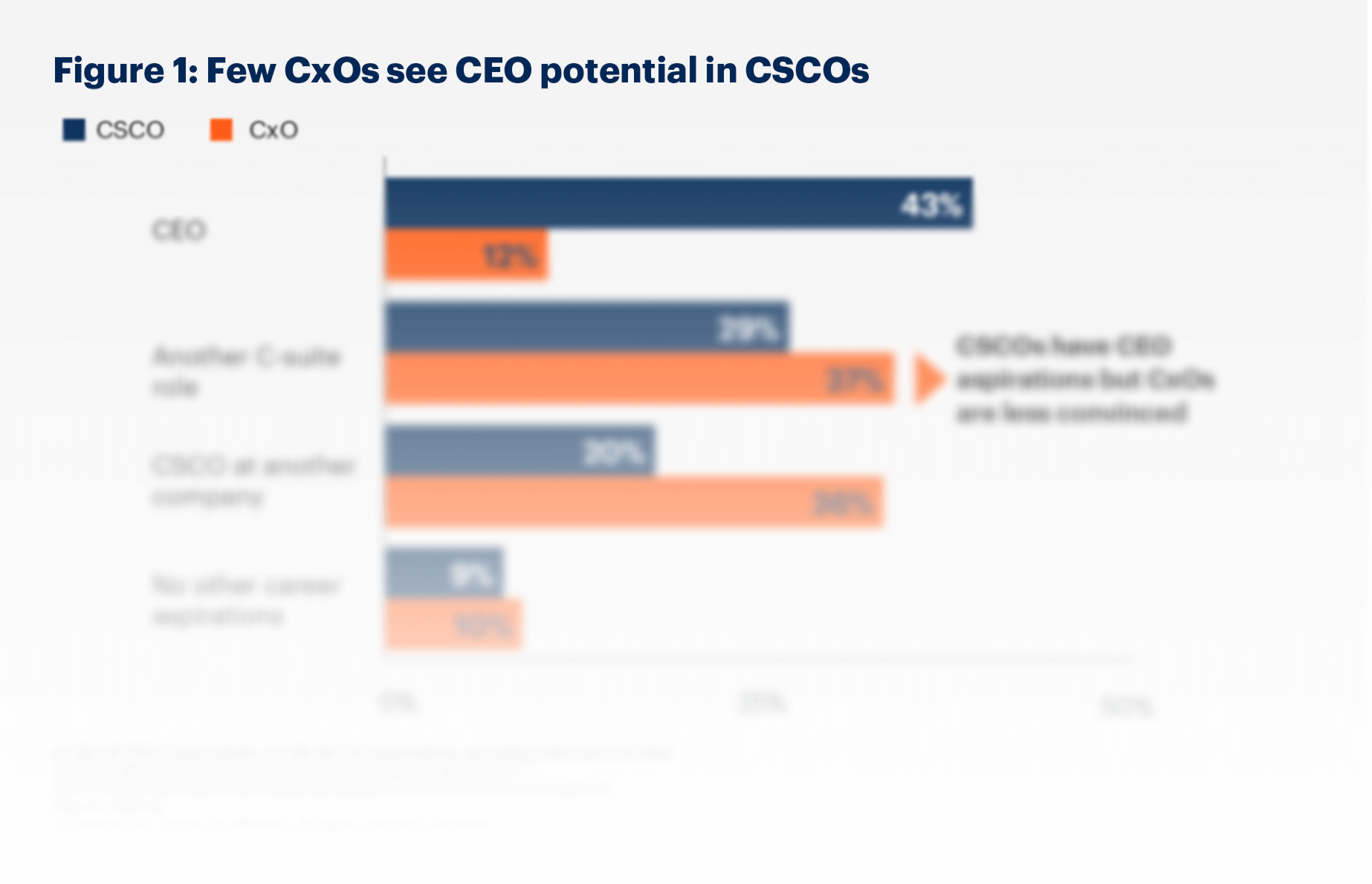
Moreover, more than 40% of CSCOs think they could become a future CEO, but only 12% of the C-suite agrees (see Figure 1).
What’s getting in the way of CSCOs getting the respect they deserve?
The top challenges CSCOs identified are:
- Inability to drive recognizable value — or more specifically, the inability of CSCOs to keep disruptions from distracting their focus on strategy, planning and the other activities that matter most to the C-suite. The consequence is that CSCOs are perceived as the least collaborative CxO and the one that the CEO is least likely to listen to.2
- Falling behind the pace of technology change. It’s so bad that supply chain is listed among the functions as most lagging AI savviness (along with sales, procurement, HR and legal).3
- Unclear expectations of the supply chain. Thirty-six percent more CxOs than CSCOs think that functional execution should still be a top priority for CSCOs, highlighting the perception that CSCOs are still seen as primarily operational.1