Orlando, Fla., March 11, 2026
- Gartner client? Log in for personalized search results.
Gartner Data & Analytics Summit 2026 Orlando: Day 3 Highlights
Overview
We are bringing you news and highlights from the Gartner Data & Analytics Summit, taking place this week in Orlando, Florida. Below is a collection of the key announcements and insights coming out of the conference. You can read the highlights from Day 1 here and Day 2 here.
On Day 3 from the conference, we are highlighting sessions on the top D&A predictions for 2026, the future of D&A governance, and the use of data twins to accelerate AI-ready data. Be sure to check this page throughout the day for updates.
Key Announcements
Signature Series: Top Data and Analytics Predictions for 2026
Presented by Rita Sallam, Distinguished VP Analyst, Gartner
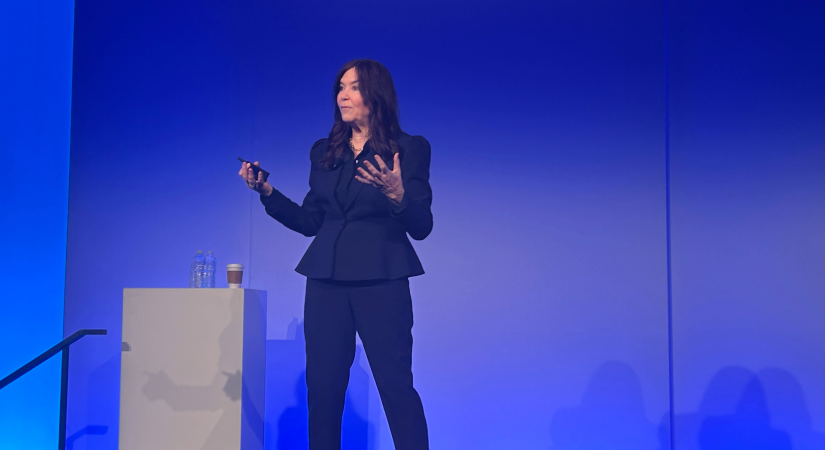
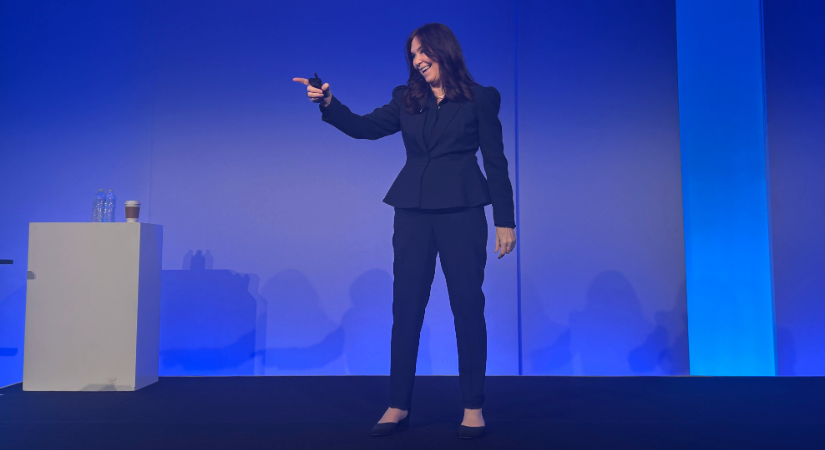
The world of data and AI is moving fast. In 2026, the lines between human intelligence, machine intelligence, and organizational intelligence continue to blur. In this session, Rita Sallam, Distinguished VP Analyst at Gartner, showcased Gartner's top D&A predictions for 2026.
Key Takeaways
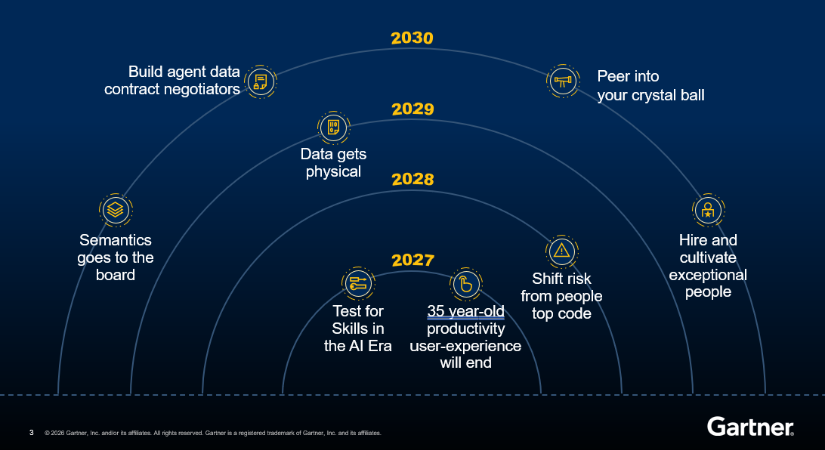
“By 2027, 75% of hiring processes will include certifications and testing for workplace AI proficiency during recruiting.”
“Through 2027, GenAI and AI agent use will create the first true challenge to mainstream productivity tools in 30 years, prompting a $58 billion market shakeup.”
“By 2029, AI agents are projected to generate 10 times more data from physical environments than from all digital AI applications combined.”
“By 2030, 50% of organizations will use autonomous AI agents to interpret governance policies and technical standards into machine-verifiable data contracts, automating compliance and governance policy enforcement.”
“By 2030, a new wave of unicorns will emerge, with $2 million annual recurring revenue (ARR) per employee boasting billion-dollar-plus valuations driven not by investor capital, but by extreme capital efficiency that produces valuation multiples based on performance, not promise.”
Journalists can read more in the press release “Gartner Announces Top Predictions for Data and Analytics in 2026.”
The Future of D&A Governance
Presented by Sarah Turkaly, Director Analyst, Gartner
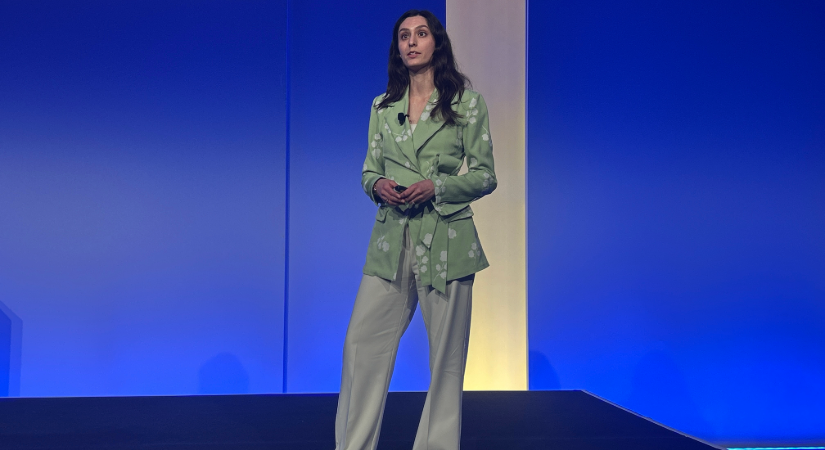
Data and analytics governance has historically lagged in innovating. We are at a tipping point where D&A governance can be a single point of failure for AI. To succeed, D&A leaders must evolve governance for the future while reinforcing proven practices. In this session, Sarah Turkaly, Director Analyst at Gartner, provided a forward-looking perspective on D&A governance, including governance of AI, by AI and for AI.

Key Takeaways
- “Data governance will be the single point of failure for organizations’ AI ambitions.”
“The core principles of D&A governance (stewardship, decision rights, accountability) are as critical now as ever. As data environments become more complex, governance models must evolve from simple, distributed controls to sophisticated, adaptive frameworks.”
“The fundamentals of D&A governance (clarity, integrity, trust) don’t just remain; they become even more essential. It’s innovation in these fundamentals that enables organizations to scale and adapt.”
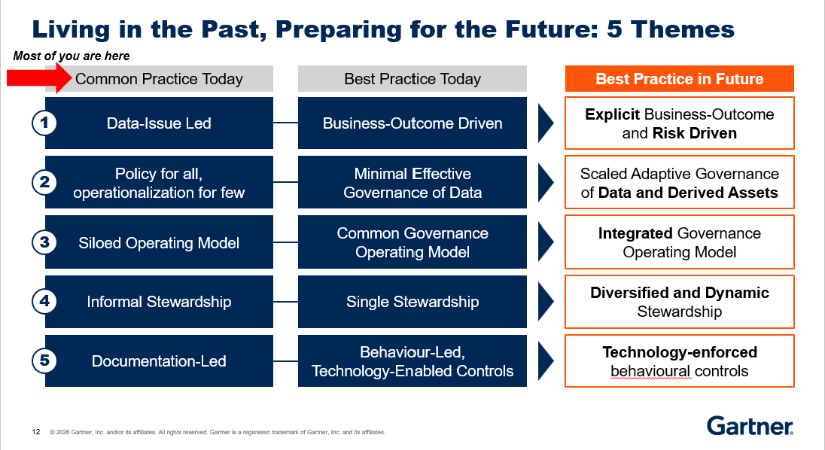
There are five best practices to adapt D&A governance for the future:
Explicit business-outcome and risk driven
Scaled adaptive governance of data and derived assets
Integrated governance operating model
Diversified and dynamic stewardship
Technology-enforced behavioral controls.
Journalists can receive additional information and/or request an interview with the Gartner expert by contacting Meghan Moran at meghan.moran@gartner.com.
Use Data Twins to Accelerate AI-Ready Data
Presented by Michael Gonzales, Sr Director Analyst, Gartner
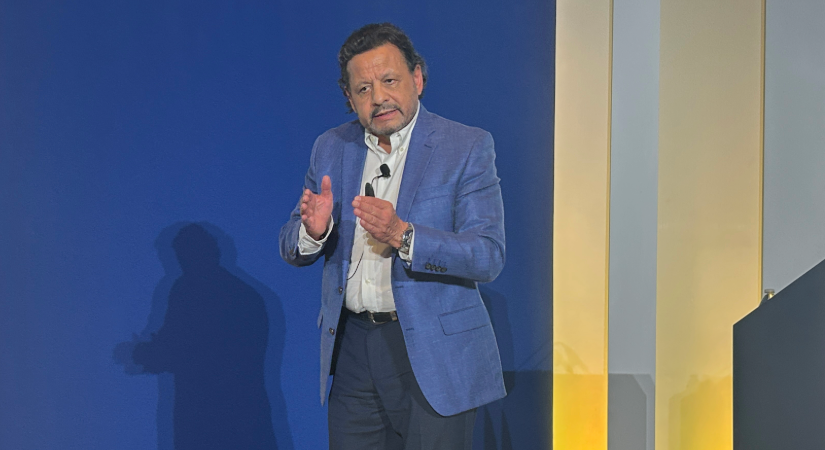
As data continues to expand, it is becoming more problematic to provide performant query access to entire datasets. The data twin, implemented as a data product, is a representative subset of the entire population that is significantly smaller. In this session, Michael Gonzales, Sr Director Analyst at Gartner, explained what a data twin is and how to implement data twins to support AI initiatives.

Key Takeaways
- “A data twin is a significantly smaller, representative subset of the total population. It is delivered as a data product, providing a governed and secure way to share and reuse data for exploration, estimation, inference and hypothesis testing.”
- “Data twins can be implemented using different, proven statistical methods that create smaller data sets for inference, hypothesis testing, and exploration without needing to conduct those efforts against the total populations.”
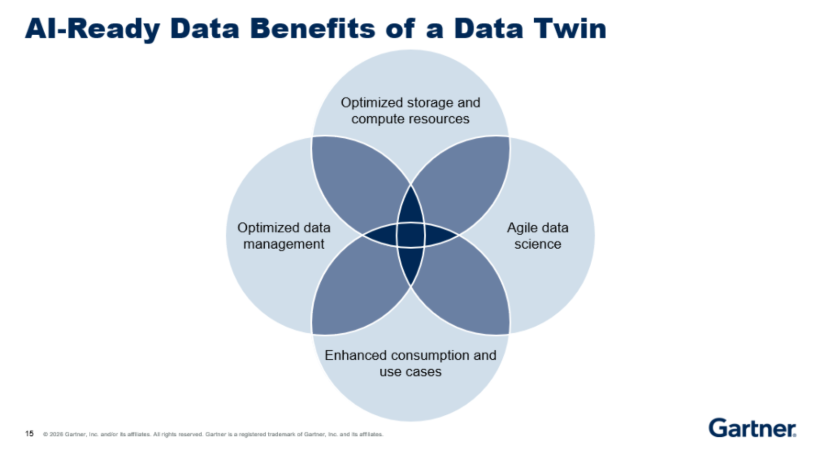
- “Data twins benefits include agile data science, enhanced consumption, optimized data management and faster data retrieval.”
- “Overall, data twins offer a more efficient and flexible solution than typical data management methods for delivering AI-ready data.”
Journalists can receive additional information and/or request an interview with the Gartner expert by contacting Meghan Moran at meghan.moran@gartner.com.
That's a wrap. See you next year!
Media contact
Matt LoDolce
Gartner
matt.lodolce@gartner.com
Meghan Moran
Gartner
meghan.moran@gartner.com


Latest releases
About Gartner
Gartner (NYSE: IT) delivers actionable, objective business and technology insights that drive smarter decisions and stronger performance on an organization’s mission-critical priorities. To learn more, visit gartner.com.