Explore how CHROs can reinvent HR, unlock enterprisewide AI value and future-proof the workforce.
- Gartner client? Log in for personalized search results.
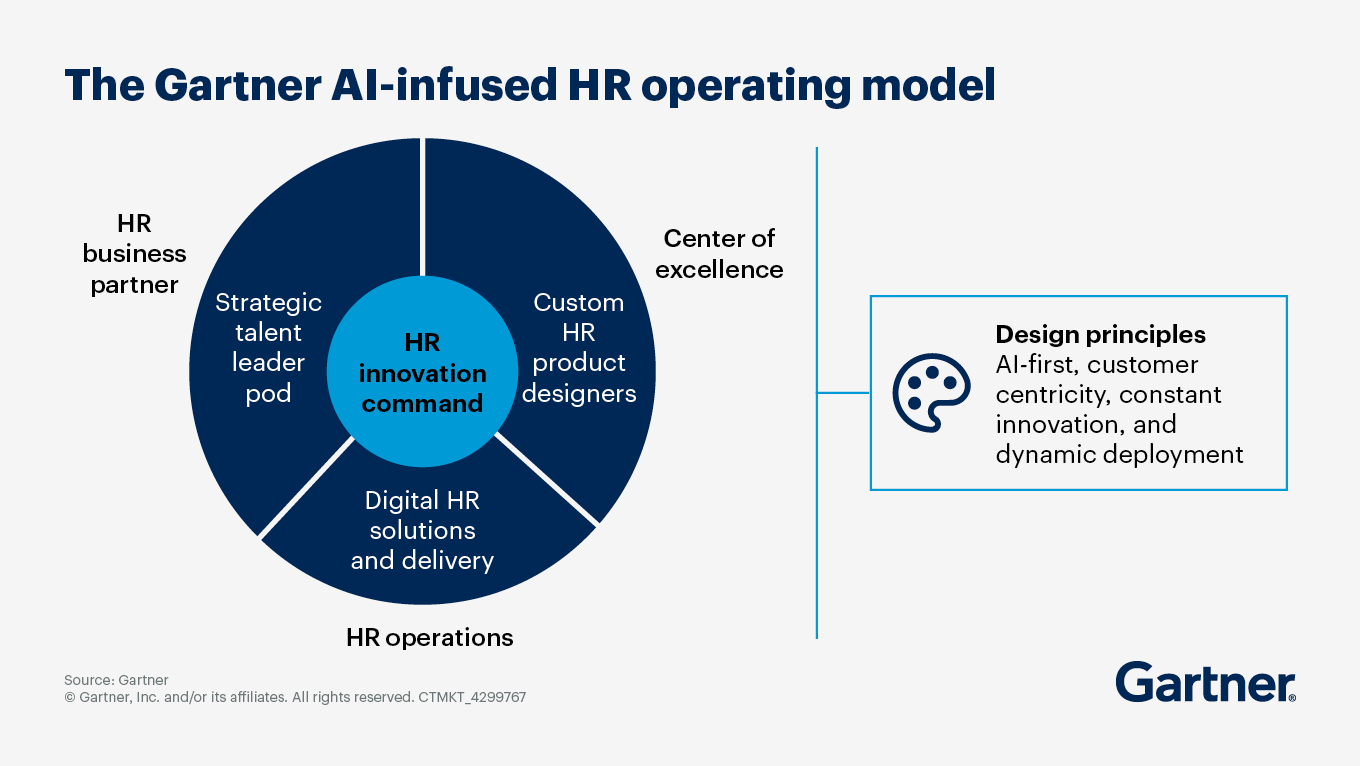
Guiding organizations through AI’s inflection point
AI is a force reshaping business, and for CHROs, this is a defining moment. The real test isn’t just about adopting new tools; it’s about leading people through rapid change, orchestrating talent strategies that blend human ingenuity with machine intelligence and ensuring the organization is ready for what’s next.
By 2030, the half-life of technical skills will shrink to just two years. More than 30 million jobs each year will be redesigned — not eliminated — by AI-driven innovation. The organizations that thrive won’t be those that chase the latest tech headlines, but those whose HR leaders act as architects of agility, continuous learning and trust.
The CHRO advantage in leading AI transformation at every level
AI’s impact extends far beyond technology adoption; it touches every part of the business. CHROs must lead in three critical areas: aligning AI with enterprise strategy, reinventing HR through intelligent experience and preparing the workforce for the future.
Turning AI into a business multiplier
AI is driving new business models and operational efficiencies, but its real value emerges when strategy and talent are in sync.
CHROs are uniquely positioned to close any existing gaps. Success depends on cross-functional partnerships: aligning AI initiatives with business priorities, building AI literacy at every level and embedding ethical guardrails from the start. The most effective CHROs anticipate change — equipping leaders and teams to adapt with confidence and clarity.
Reinventing HR through intelligent experience
Within HR, AI is transforming the function from the inside out. Automation is streamlining routine work, freeing HR teams to focus on strategic priorities like workforce planning and employee engagement.
But AI’s greatest impact comes from augmenting (not replacing) the human touch. The best HR leaders use AI to personalize learning, support well-being and deliver tailored career paths. They recognize that technology is only as powerful as the people who use it, and they keep empathy, judgment and trust at the center of every initiative.
Future-proofing the workforce with agility and resilience
The workforce is at the heart of AI transformation. Organizations investing in upskilling and reskilling are 2.5 times more likely to achieve positive business outcomes from AI. CHROs must champion adaptive learning, create “skills intelligence” programs to map strengths and gaps, and blend resourcing models — integrating employees, contractors, gig workers and AI-augmented teams — to stay agile as needs evolve.
As AI automates routine tasks, demand for leadership, creativity and emotional intelligence rises. CHROs have a mandate to keep humans at the center, ensuring that AI augments rather than replaces, and that every employee feels supported to learn, grow and thrive in an AI-powered world.
How Gartner helps HR leaders succeed with AI
AI is fundamentally changing how work gets done. With more than 2,400 business and technology analysts, 6,000 written insights and 4,000 AI use cases and case studies, Gartner helps CHROs and their leadership teams build a human‑AI workforce that aligns technology, talent and operating models with enterprise strategy.
AI in HR FAQs
What’s the most important first step for CHROs looking to implement AI across their organizations?
The first step is to align AI initiatives with overall business strategy and talent needs. CHROs should work closely with other executive leaders to identify priority areas where AI can deliver measurable value, ensure ethical guidelines are in place and invest in building AI literacy throughout the organization.
How can HR teams balance the adoption of AI with maintaining a human-centric approach?
HR teams should use AI to streamline repetitive tasks and enhance decision making, but always keep empathy, judgment and trust at the center of their work. AI should augment — not replace — the human touch. Prioritizing transparent communication, ongoing training and employee well-being ensures technology supports people rather than overshadowing them.
What are the key challenges in preparing the workforce for AI-driven change and how can CHROs address them?
The biggest challenges include skills gaps, resistance to change and concerns about job displacement. CHROs can address these by championing upskilling and reskilling programs, fostering a culture of continuous learning and communicating openly about how AI will impact roles. Creating clear pathways for career mobility and supporting employees through transitions helps build trust and resilience.
Attend a Conference
Join Gartner analysts and your peers to accelerate growth
Gather alongside your peers in Orlando to gain insights on emerging trends, receive one-on-one guidance from a Gartner expert and create a strategy to tackle your priorities head-on.
26 – 28 Oct 2026
Gartner HR Symposium/Xpo™
Orlando, FL

Drive stronger performance on your mission-critical priorities.