How to align HR’s AI investments to transformational activites to accelerate impact
- Gartner client? Log in for personalized search results.
Maximize HR Technology’s Investment Impact
CHROs face mounting pressure of long-term organizational growth and short-term cost constraints
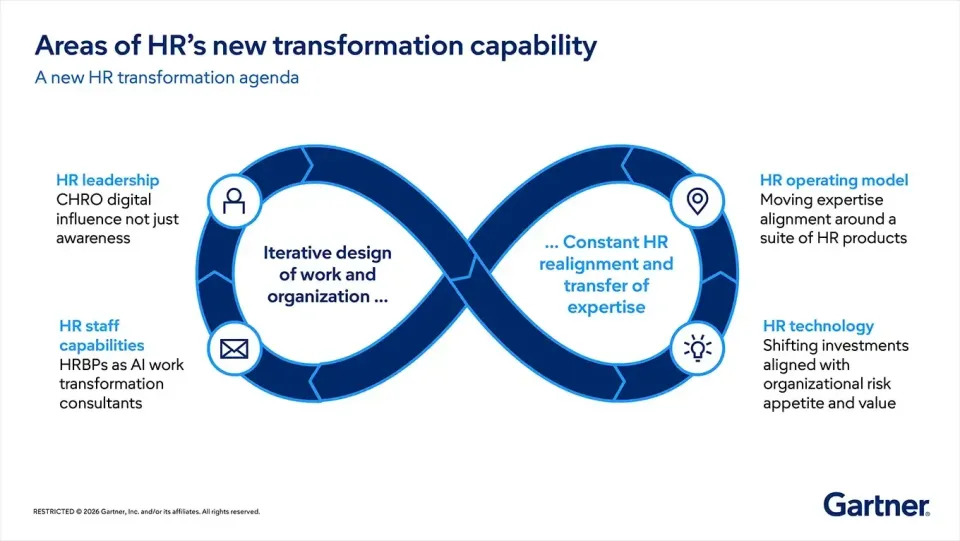
With AI’s potential to transform the HR function over the next 2-5 years, CHROs must strike a balance between long-term strategic ambitions to accelerate growth and productivity with short-term cost targets. To do so, HR must have the capability to continuously reinvent and realign itself and its HR technology capabilities with those of the wider organization.
Explore Gartner recommendations for CHROs to maximize the value of AI and align HR’s technology investments to transformational opportunities. You will discover how to:
- Align your HR technology investments to your future HR operating model
- Plan AI investments beyond short term productivity gains
- Leverage AI to augment existing critical talent strategy activities to drive growth
How AI-Powered HR Technology Drives Continuous Transformation and Maximizes Organizational ROI
Organizations that redesign work with AI are twice as likely to exceed revenue goals. As organizations undertake enterprise-wide transformations, HR must transform itself as a function and build permanent adaptability that allows HR to consistently reinvent itself while guiding the evolution of work. This alignment enables HR to continuously support and drive enterprise transformation.
Gartner predicts AI solutions are poised to augment nearly all parts of HR service delivery, and potentially perform up to half of all HR tasks currently executed by HR team members. While AI adoption continues to accelerate within HR as CHROs look for opportunities to transform how the function operates, only 20% of HR functions have an established AI strategy for HR.
As AI adoption accelerates, CHROs must ensure that HR technology investments align not only with broader organizational initiatives but also with the organization's risk appetite and long-term business value, in order to maximize ROI and organizational impact.
HR Technology FAQs
How can HR technology help position HR as a long-term enterprise leader in the AI era?
HR technology, especially AI-driven solutions, enables HR to automate core processes and redesign work, driving both efficiency and sustainable growth. By aligning your AI strategy in HR with enterprise goals and AI ambitions, CHROs can ensure HR remains a strategic leader rather than becoming obsolete.
What should CHROs consider when aligning AI investments with business priorities?
CHROs should look beyond short-term productivity gains and focus on how AI can deliver long-term value and support organizational transformation. This involves identifying the future HR operating model and ensuring AI investments are integrated with broader enterprise objectives and risk tolerance.
In what ways can AI extend beyond automating transactional HR tasks?
HR technology has the potential to augment critical talent strategy activities that can result in organizational growth. By leveraging AI to move beyond transactional HR activities, CHROs can improve decision-making, personalize development plans for critical talent, and streamline complex planning processes.