Learn to balance growing employee expectations with organizational needs
- Gartner client? Log in for personalized search results.
April 2024
HR Leaders Monthly Magazine
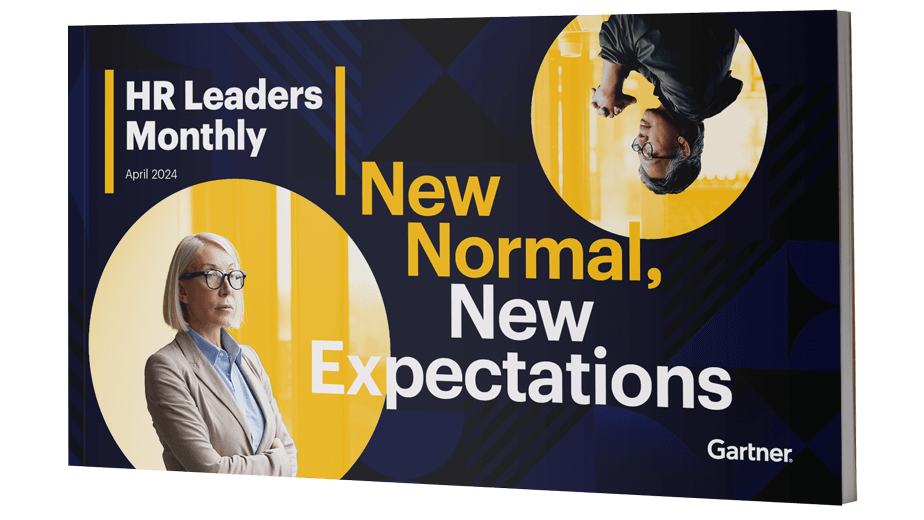
The employee-employer relationship is under considerable strain as organizations work to get "back to normal" while acknowledging that "normal" has drastically changed. HR leaders can't turn the clock back to 2019. Therefore, return-to-office strategies must take new employee expectations into account.
This issue of HR Leaders Magazine explores actionable insights to improve talent outcomes in the new normal.
Download this edition to:
- Rethink onboarding practices that forge moments that matter
- Build employees' learning capability and motivation
- Ensure employees career growth opportunities match their values
- Design a return-to-office strategy that balances employee needs
Table of contents
3 Onboarding Moments That Matter for New-Hire Connection
To improve new-hire retention in an environment of increasing candidate agency, recruiting leaders must rethink onboarding practices to forge moments of connection that anchor a new hire's role commitment, trust and confidence.
How to Align Work With Values to Support Employees' Career Expectations
Employees' expectations for career growth often exceed what the organization can feasibly provide. Talent management leaders can start to close this gap by ensuring employees' career growth opportunities reflect their personal values and interests.
Quant Corner: The Unsettled Employee-Employer Relationship
Employee feedback, when leveraged effectively, can be a powerful tool for organizational success through fostering a supportive, proactive and productive work culture. Organizations must balance the frequency with which they collect feedback with their ability to act on it.
Two Key Ways L&D Leaders Can Better Support Employee Growth
To establish an effective learning culture and ensure all employees have opportunities to develop in their careers, learning and development leaders must focus on building employees' capability and motivation to learn. They also must eliminate barriers that hinder employees' access to learning.
Design a Return-to-Office Strategy That Balances Organizational and Employee Needs
Rigid return-to-office mandates can backfire by antagonizing employees and hurting retention. This research shows how HR leaders can craft a return-to-office strategy that balances organizational objectives with employee buy-in.
Metrics of the Months: Employee Expectations on Climate Change Protection
As organizations strengthen their contingency plans for climate change, they must take steps to proactively involve HR leaders in addressing climate change protection demands.